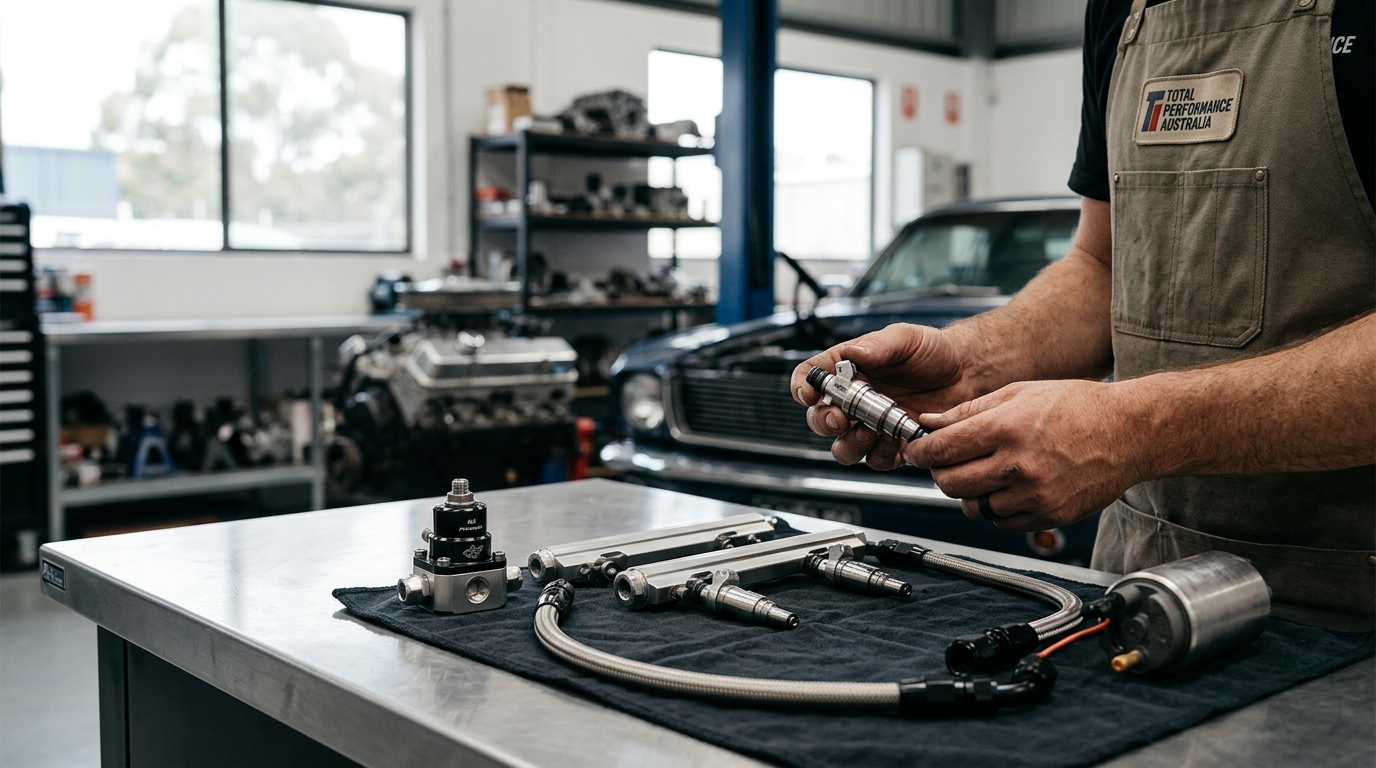
Modern high-performance engine building demands precise fuel delivery to unlock reliable horsepower gains. Total Performance Australia specializes in the critical components that bridge the gap between stock reliability and track-ready power. Upgrading your fuel system is not merely about adding more fuel; it is about optimizing pressure, flow rate, and atomization to match your engine's specific airflow characteristics. Whether you are building a Chevy LS engine or a Ford Coyote, the foundation of your powertrain success lies in the fuel delivery architecture.
Understanding Fuel Delivery Dynamics
Fuel delivery is the lifeblood of any internal combustion engine. The primary goal of any fuel system upgrade is to maintain consistent pressure across the entire RPM and load range. When an engine operates under high load, the demand for fuel increases exponentially. If the system cannot keep up, the engine runs lean, leading to catastrophic detonation and potential engine failure.
A fuel system is a collection of components designed to store, pressurize, and deliver fuel to the engine's combustion chambers. This includes the tank, pump, lines, filters, regulators, and injectors. For high-performance applications, stock components are often the limiting factor. Upgrading these components ensures that your engine receives the exact mixture it needs for optimal power and efficiency.
Research indicates that proper fuel system tuning can increase horsepower by significant margins depending on the engine's airflow capacity. The key is matching the flow rate of your pump and injectors to the engine's cubic inch displacement and boost level. Over-sizing can lead to poor idle quality, while under-sizing causes power loss at high RPM.
Chevy LS Platform Fuel Upgrades
The Chevrolet LS family of engines is renowned for its versatility and aftermarket support. These engines typically use a high-pressure fuel rail system driven by an electric in-tank or external pump. For naturally aspirated builds, upgrading to high-flow injectors is often sufficient. However, for boosted applications, the entire fuel delivery chain must be reinforced.
One of the most critical upgrades for LS engines is the cylinder head. LS3 cylinder heads with large ports require a corresponding increase in fuel flow to maintain the correct air-fuel ratio. Without adequate fuel, the increased airflow becomes a liability rather than an asset.
For extreme horsepower levels, many builders move to a dual-pump setup or a high-flow external fuel pump system. This ensures that the fuel rail remains pressurized even during high-G cornering or hard acceleration. The Chevy LS engine parts market offers a wide range of solutions, from simple pump upgrades to complete fuel cell systems.
Ford Platform Fuel Upgrades
Ford engines, particularly the Coyote and the classic FE big blocks, have distinct fuel delivery requirements. The Coyote engine, for example, uses a high-pressure direct injection system in later models, while earlier versions rely on port injection. Upgrading the fuel system on a Coyote often involves increasing the flow rate of the injectors and ensuring the high-pressure pump can keep up with the demand.
For older Ford engines, such as the Ford 351C Cleveland, the approach is different. These engines often benefit from upgrading to a high-flow mechanical fuel pump or installing an electric pump conversion. The key is to ensure that the fuel pressure is stable and that the fuel is delivered consistently to the carburetor or throttle body.
Ford Barra engines, popular in the Australian market, also require careful fuel system tuning. The Barra's high-revving nature means that fuel starvation can occur quickly if the pump cannot keep up. Upgrading to a high-flow electric pump and ensuring proper line sizing is essential for maintaining performance.
Electric vs. Mechanical Fuel Pumps
The choice between electric and mechanical fuel pumps depends on the engine application and the desired performance level. A mechanical fuel pump is a cam-driven device that provides a steady, predictable flow rate. It is simple, reliable, and often preferred for classic muscle cars and low-RPM applications.
Electric fuel pumps, on the other hand, offer several advantages for high-performance builds. They can be mounted in the tank or externally, allowing for greater flexibility in system design. Electric pumps can also provide higher flow rates and maintain pressure more effectively at high RPMs. For modern EFI systems, an electric pump is almost always required.
When choosing between the two, consider the engine's power goals. For builds exceeding 500 horsepower, an electric pump is generally the safer and more effective choice. The fuel pumps available at Total Performance Australia include both high-flow electric options and robust mechanical replacements for classic builds.
Fuel Regulators and Filtration
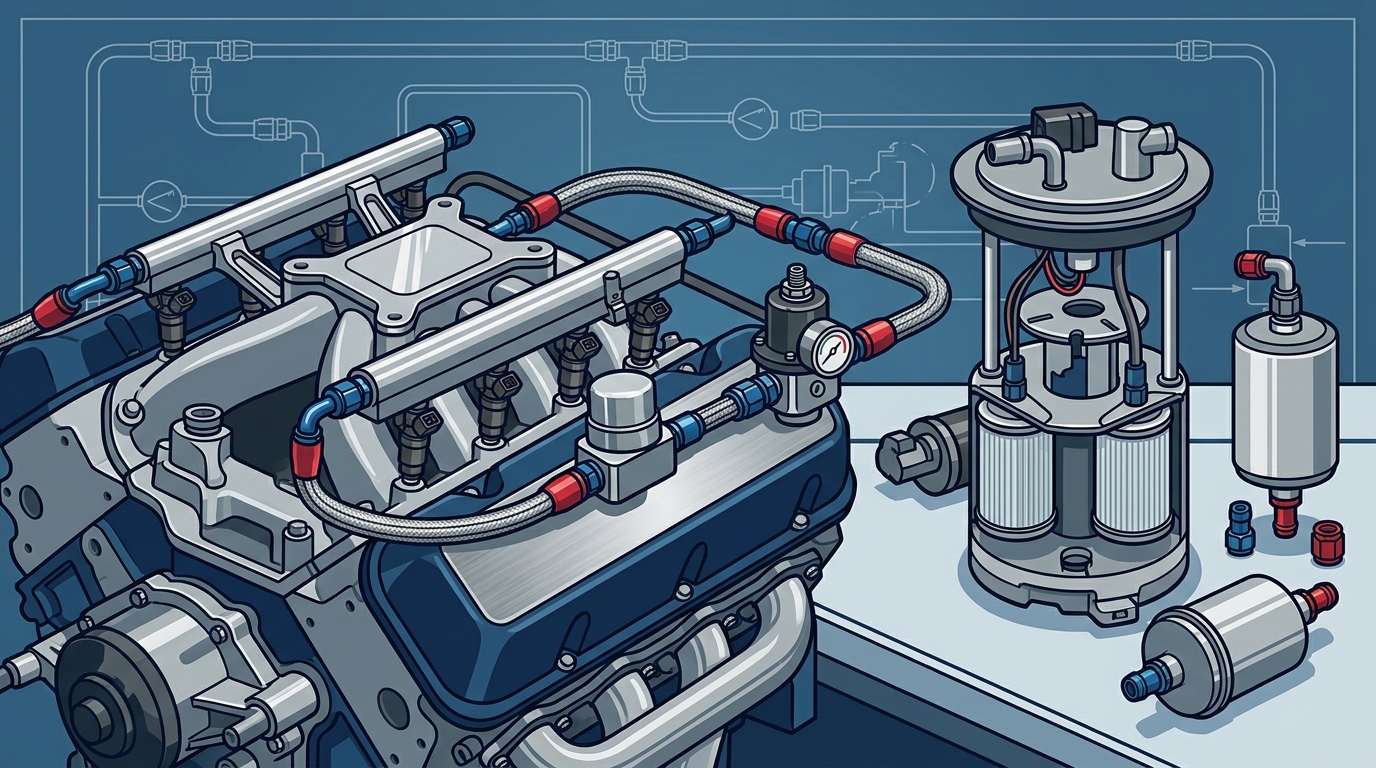
A fuel pressure regulator is a critical component that maintains consistent fuel pressure regardless of engine load. Without a regulator, fuel pressure would rise with engine RPM, leading to a rich mixture and poor performance. A properly sized regulator ensures that the fuel pressure increases proportionally with manifold vacuum or boost pressure.
Filtration is equally important. Debris in the fuel system can clog injectors and damage pumps. Installing a high-quality fuel filter in-line with the pump is a standard practice. For high-performance applications, a dual-filter setup or a high-flow in-tank filter can provide additional protection.
The fuel logs, regulators & fittings category at Total Performance Australia offers a wide range of regulators and filtration solutions. Choosing the right regulator involves matching the flow capacity to your engine's fuel demand while ensuring the pressure range is appropriate for your injectors.
Comparison of Fuel System Types
Understanding the differences between various fuel system types is essential for making the right upgrade decision. Below is a comparison of common fuel system configurations used in high-performance builds.
| System Type | Best For | Pros | Cons |
|---|---|---|---|
| Stock In-Tank Pump | Stock to Mild Street | Quiet, OEM fitment | Limited flow, heat soak |
| High-Flow Electric Pump | Street to Strip | High flow, consistent pressure | Requires wiring, noise |
| Dual Pump Setup | High HP / Boosted | Redundancy, extreme flow | Complex installation |
| Mechanical Pump | Classic Muscle / Carb | Simple, reliable | Pressure limited by cam |
Key Takeaways
- Match Flow to Demand: Ensure your pump and injectors can deliver the required fuel volume for your engine's horsepower and boost level.
- Maintain Pressure: A reliable fuel pressure regulator is essential for consistent performance across all operating conditions.
- Filtration is Critical: Clean fuel protects your expensive injectors and pump from premature failure.
- LS Specifics: LS engines often require high-flow in-tank pumps or external pump upgrades for boosted applications.
- Ford Versatility: Ford engines range from classic mechanical pump setups to modern high-pressure direct injection systems.
- Component Quality: Using high-quality components from reputable suppliers like Total Performance Australia ensures longevity and performance.
- Professional Tuning: Always have your fuel system tuned by a professional to ensure the correct air-fuel ratio.
Frequently Asked Questions
What is the best fuel pump for a Chevy LS engine?
For most high-performance LS builds, a high-flow electric in-tank pump or an external high-pressure pump is recommended. The specific flow rate depends on the engine's horsepower and boost level.
Do I need a fuel pressure regulator for EFI?
Yes, a fuel pressure regulator is essential for EFI systems to maintain consistent fuel pressure relative to manifold pressure, ensuring accurate fuel delivery.
How do I choose the right fuel injectors?
Calculate the required injector flow rate based on your engine's horsepower, fuel type, and desired duty cycle. A common rule of thumb is to size injectors at 80% duty cycle at peak power.
Can I use a mechanical fuel pump on a modern EFI engine?
Generally, no. Modern EFI systems require the high and consistent pressure that electric pumps provide. Mechanical pumps are typically limited to carbureted applications.
What is the difference between a fuel regulator and a fuel pressure relief valve?
A fuel regulator maintains a set pressure differential, while a relief valve opens to release excess pressure if it exceeds a safe limit, protecting the system from over-pressurization.
How often should I replace my fuel filter?
It is recommended to replace your fuel filter every 10,000 to 15,000 miles or as specified by the manufacturer. More frequent changes may be needed in dirty fuel environments.
What are the benefits of a dual fuel pump setup?
A dual pump setup provides increased flow capacity and redundancy, which is crucial for high-horsepower or boosted engines that demand maximum fuel delivery.
Shop High Performance Parts
Ready to upgrade your fuel system? Explore the complete range of high-performance fuel pumps, regulators, and injectors at Total Performance Australia. With free shipping on orders over $200, you can equip your Chevy, Ford, or Holden engine with the best components for maximum power and reliability.