
Modern high-performance engine building demands precision fuel delivery that matches raw horsepower potential. Total Performance Australia supplies the critical components needed to transform stock fueling into race-ready reliability. Upgrading your fuel system is not merely about adding power; it is about ensuring your engine survives the stress of high-RPM operation without leaning out or flooding.
Carburetor Upgrades and EFI Conversion
The foundation of any fuel system upgrade begins with how fuel is metered into the engine. For classic muscle cars, the carburetor remains a popular choice for its mechanical simplicity and throttle response. However, carburetor technology has evolved significantly to meet modern emissions and performance standards.
For Chevrolet enthusiasts, the Holley and Edelbrock carburetors are industry standards. These units provide precise fuel metering for small block and big block engines alike. If you are running a high-horsepower build, a double-pumper carburetor is often necessary to prevent lean conditions during rapid acceleration.
On the Ford side, the Edelbrock Performer and Thunder Series carburetors are widely used for Windsor and Cleveland engines. These carburetors offer excellent idle quality and mid-range torque, which is crucial for street-driven performance vehicles. The transition from carburetors to Electronic Fuel Injection (EFI) is another critical decision point for many builders.
EFI systems provide superior fuel atomization and consistency across all operating temperatures. EFI systems and throttle bodies allow for precise tuning via software, making them ideal for forced induction applications where fuel demands change dynamically with boost pressure.
Carburetor Tuning Kits
Even with a new carburetor, fine-tuning is essential. Carburetor tuning kits allow you to adjust main jets, power valves, and accelerator pumps to match your specific camshaft profile and intake manifold. This level of customization ensures that your engine runs at its optimal air-fuel ratio.
Selecting the Right Fuel Pump
Fuel delivery volume is the most common bottleneck in high-performance builds. A stock mechanical pump cannot keep up with the demands of a high-horsepower engine. You must upgrade to a high-flow electric fuel pump to maintain consistent pressure.
For Chevrolet engines, particularly the LS platform, in-tank fuel pumps are standard. However, for high-horsepower applications, an external high-pressure pump is often required. The fuel pumps available for LS engines must be capable of delivering hundreds of gallons per hour to support nitrous oxide or turbocharged setups.
Ford engines, especially the Coyote and Modular V8s, also require significant fuel flow upgrades. The Ford 5.0L and 5.4L engines benefit from high-flow fuel pumps that can handle the increased cylinder count and displacement. For older Ford small blocks, such as the 289 or 302, a high-performance mechanical pump or an electric conversion kit is necessary.
Fuel Pump Compatibility
When selecting a fuel pump, you must consider the fuel type. Ethanol blends require pumps with compatible seals and materials to prevent degradation. Mechanical and electric fuel pumps each have their advantages, with electric pumps offering consistent pressure regardless of engine orientation.
Fuel Pressure Regulators and Stability
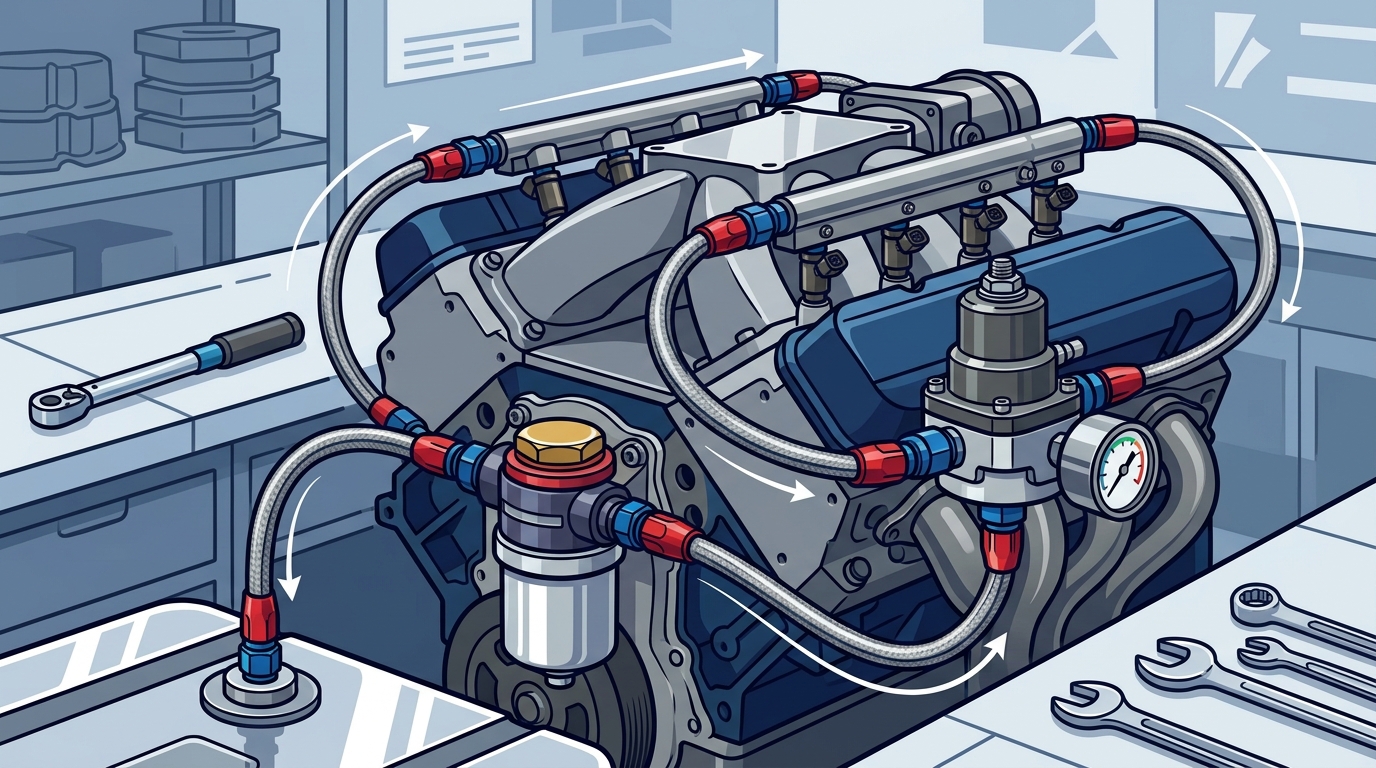
Maintaining stable fuel pressure is critical for engine performance. A fuel pressure regulator ensures that the fuel pressure remains constant relative to the intake manifold vacuum. This consistency allows the injectors or carburetor jets to deliver the correct amount of fuel.
For carbureted engines, a vacuum-operated regulator is typically used. This type of regulator adjusts fuel pressure based on engine load, providing richer mixtures under high load and leaner mixtures at idle. For EFI systems, a return-style or returnless regulator is used to maintain precise pressure.
High-performance applications often require adjustable fuel pressure regulators. These regulators allow you to fine-tune the fuel pressure to match your specific horsepower goals. Fuel regulators and fittings are essential components that ensure your fuel system operates safely and efficiently.
Regulator Installation Tips
When installing a fuel pressure regulator, ensure that the vacuum line is connected to a port that provides accurate manifold vacuum. A faulty vacuum line can cause incorrect fuel pressure, leading to poor performance or engine damage. Always use high-quality vacuum lines that can withstand heat and fuel vapors.
Fuel Lines and Fittings
The fuel lines and fittings that connect your pump to the engine are often overlooked but are vital for safety and performance. Standard rubber fuel lines can degrade over time and may not handle high pressures. Braided stainless steel fuel lines are the preferred choice for high-performance builds.
For Chevrolet engines, AN fittings are the standard. These fittings provide a secure, leak-proof connection that can handle high pressures. Fuel lines and fittings must be sized correctly to prevent flow restrictions. A common mistake is using lines that are too small, which can starve the engine of fuel under high load.
Ford engines also utilize AN fittings, particularly in modern performance applications. The Ford Coyote and Mustang GT models often require specific fuel line configurations to accommodate the engine bay layout. Ensure that your fuel lines are routed away from heat sources and moving parts to prevent damage.
Fuel Line Sizing
The size of your fuel lines depends on the flow rate of your fuel pump and the demands of your engine. For high-horsepower builds, 6AN or 8AN lines are typically required. These larger lines reduce flow restriction and ensure that fuel reaches the engine quickly.
Component Comparison Matrix
Choosing the right components for your Ford or Chevy engine can be complex. The table below summarizes the key differences between common fuel system upgrades.
| Component | Best For | Key Benefit | Typical Application |
|---|---|---|---|
| Carburetor | Classic Muscle Cars | Throttle Response | Small Block Chevy, Ford Windsor |
| EFI System | High Horsepower Builds | Precision Tuning | LS Engines, Coyote V8 |
| High-Flow Fuel Pump | Forced Induction | Consistent Pressure | Turbo/Supercharged Engines |
| AN Fittings | High Pressure Lines | Leak-Proof Safety | All High-Performance Builds |
Key Takeaways
- Upgrading from a stock fuel pump to a high-flow electric pump is essential for engines producing over 400 horsepower.
- EFI systems offer superior fuel atomization and are ideal for modern Chevrolet LS and Ford Coyote engines.
- Carburetors remain a viable option for classic Ford and Chevy builds, provided they are properly tuned with tuning kits.
- Always use braided stainless steel fuel lines with AN fittings to ensure safety and prevent leaks.
- Fuel pressure regulators must be matched to your engine's vacuum requirements to maintain consistent fuel delivery.
- Total Performance Australia provides a comprehensive range of parts for both Ford and Chevy engines, including transmission components and engine internals.
- Proper fuel line sizing is critical; undersized lines can cause fuel starvation and engine damage.
Frequently Asked Questions
What is the best fuel pump for a high-horsepower Chevy LS engine?
A high-flow external electric fuel pump is typically required for LS engines producing over 600 horsepower. These pumps must be capable of delivering sufficient volume to prevent lean conditions under boost.
Can I use a carburetor on a modern Ford Coyote engine?
While technically possible, converting a modern Ford Coyote engine to a carburetor is complex and often impractical. EFI systems are designed specifically for the Coyote's fuel management needs and offer better performance and emissions compliance.
How do I choose the right fuel pressure regulator?
Select a regulator that matches your fuel pump's output and your engine's vacuum requirements. Adjustable regulators allow for fine-tuning to match your specific horsepower goals.
What are AN fittings and why are they important?
AN fittings are a standard for high-performance fuel lines. They provide a secure, leak-proof connection that can handle high pressures, making them essential for safety in race cars and high-horsepower street builds.
Do I need a fuel pressure regulator for a carbureted engine?
Yes, a vacuum-operated fuel pressure regulator is recommended for carbureted engines to ensure consistent fuel pressure regardless of engine load or altitude changes.
What is the difference between a return-style and returnless fuel system?
A return-style system sends excess fuel back to the tank, helping to cool the fuel pump. A returnless system uses a regulator in the tank or on the rail, simplifying the plumbing but potentially running hotter fuel.
How often should I replace my fuel lines?
Braided stainless steel fuel lines are durable and can last for many years. However, you should inspect them regularly for signs of wear, corrosion, or damage, especially if your vehicle is used in track conditions.
Shop High Performance Parts
Ready to upgrade your Ford or Chevy fuel system? Visit Total Performance Australia to browse our extensive catalog of high-performance parts. From fuel pumps to carburetors, we have everything you need to build a reliable and powerful engine. Free shipping on orders over $200.