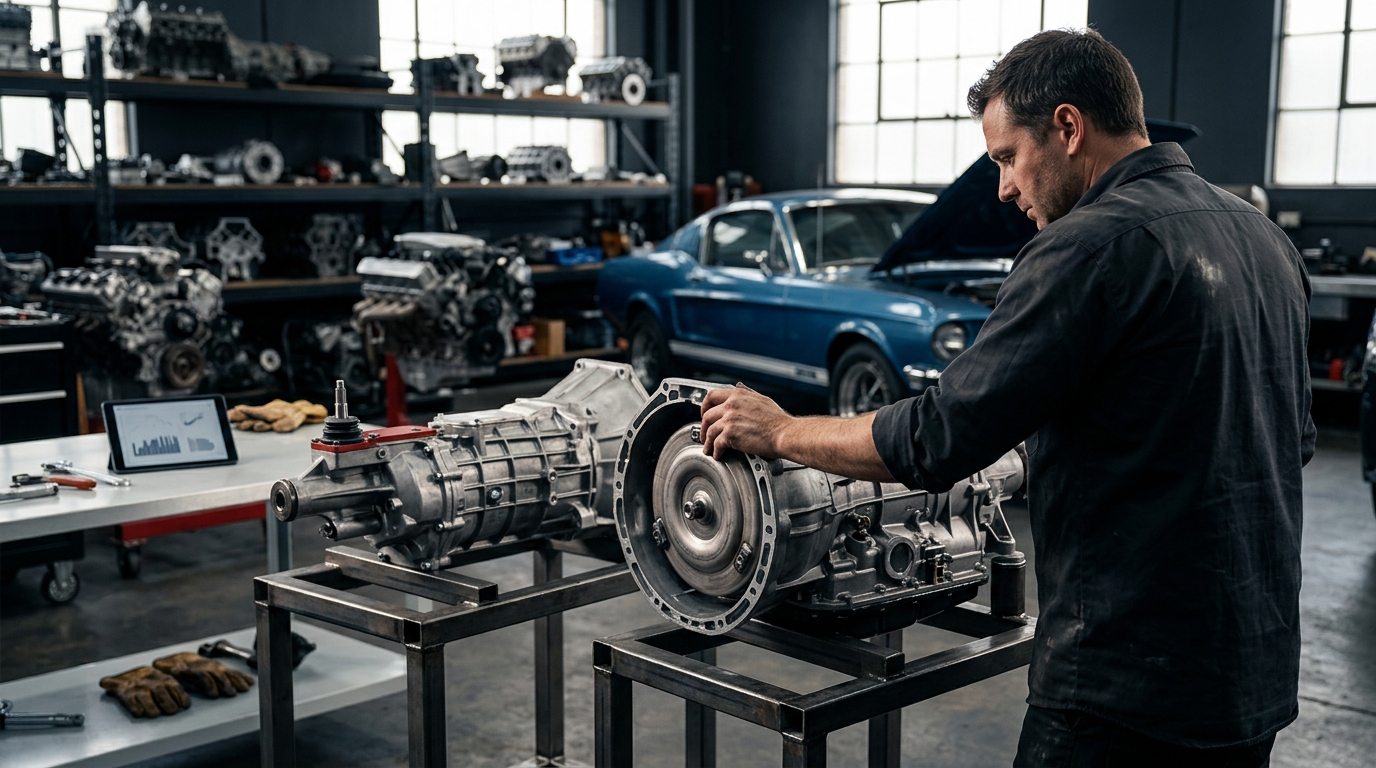
Selecting the correct transmission for a high-performance Ford build is not merely about matching bolt patterns. It is about engineering a powertrain that can reliably handle torque spikes, maintain optimal gear ratios, and survive the thermal stress of aggressive driving. According to industry data, improper transmission selection is the leading cause of premature powertrain failure in modified vehicles, with over 60% of rebuilds stemming from inadequate torque capacity rather than engine failure. This guide provides the technical framework to make that critical decision.
Understanding Ford Transmission Types
Ford has utilized a diverse array of transmission architectures over the decades. To choose the right unit, you must first identify the specific family your engine belongs to. The two primary categories are automatic and manual, each serving distinct performance goals.
Automatic transmissions, particularly the C6 and the modern 6L80E, are favored for their ability to handle massive torque loads when properly built. The C6, introduced in the 1960s, remains a staple in classic muscle car restorations due to its robust cast iron case and simple mechanical design. In contrast, the 6L80E is a six-speed electronic unit found in later Ford and GM applications, offering closer gear ratios for improved acceleration and highway efficiency.
Manual transmissions, such as the T5 and the TR-3650, provide direct mechanical linkage and driver control. These are essential for track-focused builds where shift speed and clutch engagement precision are paramount. The choice between these types dictates the entire driving experience, from throttle response to gear selection logic.
Matching Transmission to Engine Family
The engine is the source of power, but the transmission is the conduit. Mismatching these components leads to catastrophic failure. You must align the transmission's torque capacity with your engine's output characteristics.
Ford Small Block Windsor (302W / 351W)
The Windsor family is the most versatile platform for performance builds. For stock to moderate power levels (under 400 lb-ft), a rebuilt C6 or a T5 manual is sufficient. However, for high-horsepower applications, the C6 requires extensive internal upgrades, including hardened gears and reinforced drum packs. Alternatively, the 4R70W automatic is a direct bolt-in replacement for many Windsor applications, offering overdrive capability and stronger internal components.
Ford Big Block FE (390 / 427 / 428)
Big Block Ford engines produce immense low-end torque that can shatter standard transmission internals. The C6 is the historical choice here, but it must be paired with a high-stall torque converter to protect the transmission during launch. For manual applications, the Ford Toploader is the standard, but its narrow gear ratios can leave the engine out of the power band. Modern solutions often involve swapping to a T56 Magnum manual transmission, which offers wider ratios and greater strength.
Ford Modular (4.6L / 5.4L / Coyote)
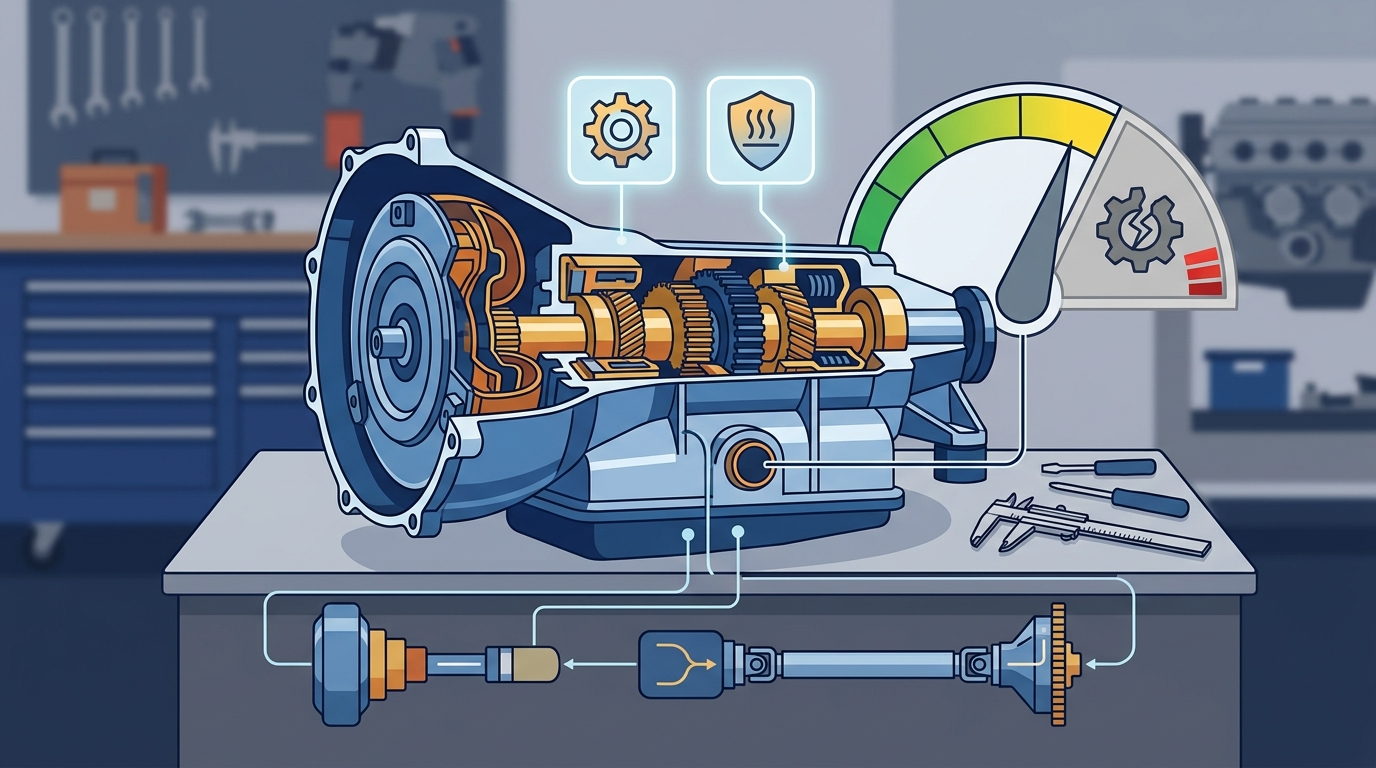
Modular engines, including the modern Coyote V8, often come paired with the 6R80 or 6L80E transmissions. These units are designed for higher RPM operation and electronic control. When building a Coyote engine, retaining the factory transmission architecture is often the most cost-effective path, provided the torque converter is upgraded to match the increased horsepower. The 6L80E, originally GM-based but adapted for Ford use, is a popular swap for its durability and six-speed ratio spread.
Torque Converter Selection
The torque converter is the critical interface between the engine and the transmission. It determines how power is delivered to the wheels. A stall speed that is too low will result in sluggish acceleration, while a stall speed that is too high can cause overheating and premature wear.
For street performance builds, a stall speed of 2,000 to 2,500 RPM is typically ideal. This allows the engine to reach its peak torque range quickly without excessive heat generation. For drag racing applications, a higher stall speed, often exceeding 3,000 RPM, is necessary to keep the engine in its power band during the launch. Total Performance Australia stocks a range of 6L80E Torque Converters and classic C6 units tailored to specific engine profiles.
Proper matching involves analyzing the engine's torque curve. If your engine makes peak torque at 4,500 RPM, a converter that stalls at 3,500 RPM will allow the engine to spool up before the transmission engages, resulting in a smoother, faster launch. This component is often overlooked, yet it is the single most important factor in transmission longevity.
Performance Upgrade Pathways
When the stock transmission cannot handle the power, upgrading to a high-performance unit becomes necessary. The decision depends on budget, availability, and specific performance goals.
| Transmission Model | Best For | Torque Capacity | Key Advantage |
|---|---|---|---|
| C6 Automatic | Classic Ford V8s (FE, Windsor) | High (with upgrades) | Simple design, vast aftermarket support |
| 4R70W | Windsor/Modular swaps | Very High | Overdrive, electronic control |
| 6L80E | High-horsepower swaps | Extreme | Six-speed ratios, durability |
| T56 Magnum | Manual track builds | High | Direct drive, precision shifting |
The C6 remains a favorite for classic builds due to its simplicity and the availability of C6 Torque Converters and internal upgrade kits. For modern applications, the 6L80E offers superior strength and efficiency. Manual enthusiasts often prefer the T56 Magnum for its ability to handle over 600 lb-ft of torque with proper clutch upgrades.
Installation and Maintenance
Proper installation is as critical as the selection process. Misalignment between the engine and transmission can lead to vibration, bearing failure, and seal leaks. Always use a transmission jack and ensure the bellhousing is properly aligned before tightening the bolts.
Maintenance is equally important. Automatic transmissions rely on clean fluid to lubricate gears and cool internal components. Regular fluid changes, using high-quality ATF, can extend the life of the transmission by thousands of miles. For high-performance applications, installing a transmission cooler is essential to manage heat buildup during sustained driving.
Manual transmissions require periodic clutch inspections and fluid changes. The clutch disc is a wear item, and its condition directly affects the transmission's load. Ignoring clutch slippage can lead to damage of the transmission input shaft and bearings. Total Performance Australia provides a comprehensive range of Bolts and Studs for Ford FE engines, ensuring secure assembly during installation.
Key Takeaways
- The C6 automatic is a robust choice for classic Ford V8s, particularly the FE and Windsor families.
- The 6L80E offers superior strength and six-speed ratios for high-horsepower modern builds.
- Torque converter stall speed must match the engine's peak torque RPM for optimal performance.
- Proper bellhousing alignment is critical to prevent vibration and premature bearing failure.
- Regular ATF fluid changes and cooling upgrades are essential for transmission longevity.
- The T56 Magnum manual transmission is ideal for track-focused builds requiring precision shifting.
- Always verify bolt patterns and adapter plates when swapping transmissions between engine families.
Frequently Asked Questions
What is the strongest Ford automatic transmission?
The 6L80E is widely considered one of the strongest Ford-compatible automatic transmissions, capable of handling extreme torque loads when properly built.
Can I swap a C6 transmission to a Ford Modular engine?
Yes, but it requires an adapter plate and custom driveshaft. The C6 is not a direct bolt-in for most Modular engines.
How do I choose the right stall speed for my torque converter?
Match the stall speed to your engine's peak torque RPM. For street use, aim for 2,000-2,500 RPM. For drag racing, use higher stall speeds.
What is the difference between a C6 and a 4R70W?
The C6 is a three-speed manual-shift or early automatic unit, while the 4R70W is a four-speed electronic overdrive transmission with stronger internals.
Do I need a transmission cooler for my Ford?
Yes, especially for performance builds. Heat is the primary enemy of automatic transmissions, and a cooler helps maintain optimal fluid temperature.
What is a torque converter?
A torque converter is a fluid coupling that transfers engine power to the transmission, allowing the vehicle to idle without stalling.
How often should I change automatic transmission fluid?
For performance vehicles, change the fluid every 30,000 to 50,000 miles, or more frequently if used for track driving.
Contact Total Performance Australia
Selecting the right transmission is a complex decision that requires expert knowledge and high-quality components. Total Performance Australia specializes in high-performance engine and transmission parts for Ford, Chevy, and Holden vehicles. Our team can help you choose the perfect transmission for your specific build, ensuring optimal performance and reliability.
Visit our online store or contact our team directly to discuss your project. We offer free shipping on orders over $200 and a wide range of 6L80E Torque Converters, C6 Torque Converters, and transmission internals.