

High-performance fuel system upgrades are best for improving engine performance in a Ford or Chevy by ensuring the engine receives the precise volume and pressure of fuel required for its specific power output. Total Performance Australia provides the specialized components needed to balance these systems effectively. This guide covers fuel pump sizing, injector selection, pressure regulation, and line sizing to help you build a reliable powertrain.
Fuel Pump Sizing
Fuel pump sizing is the process of selecting a pump that can deliver the necessary volume of fuel to the engine at high RPMs. A pump that is too small will cause fuel starvation, while a pump that is too large can create excessive pressure and cavitation. For a naturally aspirated Ford 302 or Chevy 350, a high-volume mechanical pump is often sufficient. However, for boosted applications or high-horsepower builds, an electric pump is required.
Calculating Fuel Requirements
To size a pump correctly, you must calculate the total fuel flow required by your engine. This is based on the engine's horsepower and its specific fuel consumption (BSFC). A general rule of thumb is that a gasoline engine consumes approximately 0.5 to 0.6 pounds of fuel per horsepower per hour. Once you have the total flow in pounds per hour, you convert it to gallons per hour to match pump specifications.
Mechanical vs Electric Pumps
Fuel Injector Selection
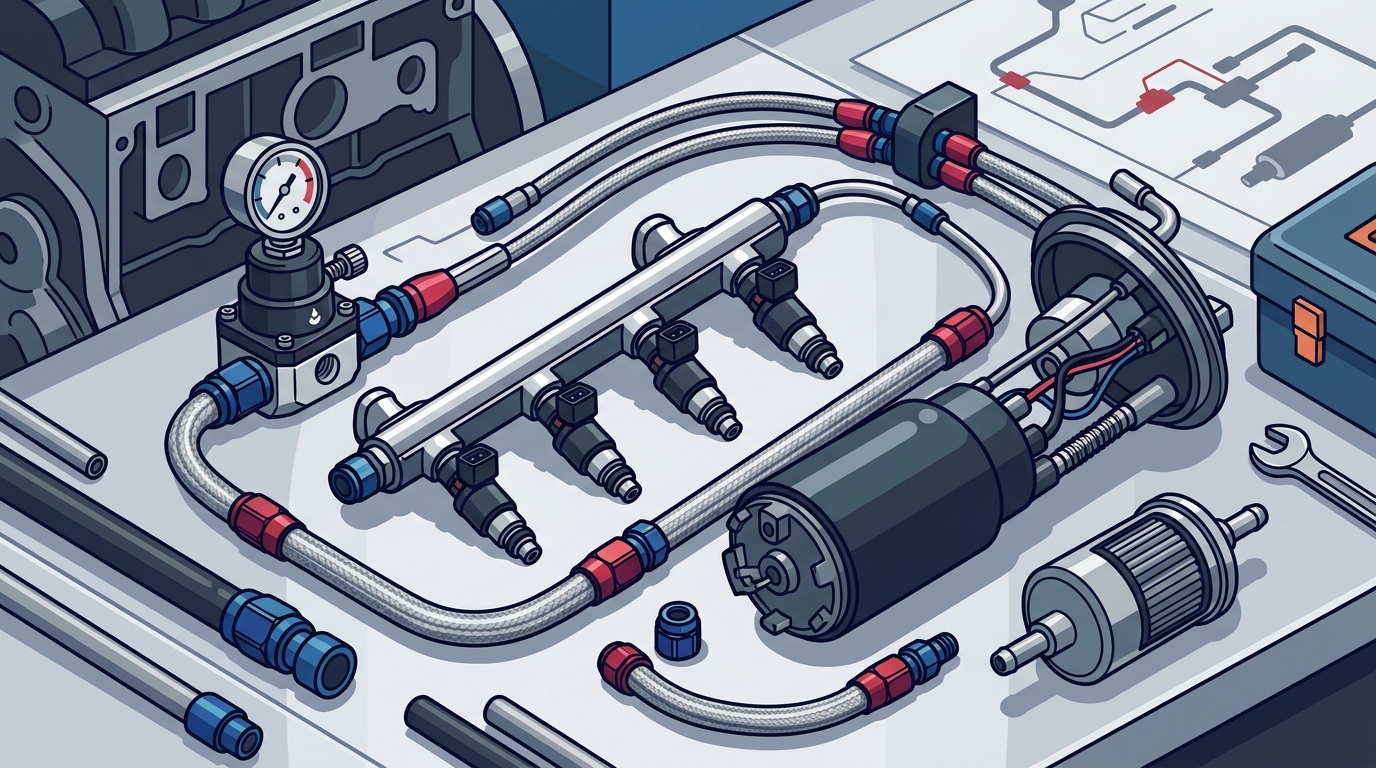
Fuel injector selection is the process of choosing injectors that can atomize the correct amount of fuel for the engine's airflow. Injectors are rated by their flow rate, measured in pounds per hour (lb/hr) or kilograms per hour (kg/hr). If an injector is too small, it will reach its maximum flow capacity before the engine reaches its peak power, limiting performance. If it is too large, it may not atomize the fuel properly at low RPMs, leading to poor drivability.
Matching Injectors to Airflow
The size of the injector must match the airflow of the engine. For a naturally aspirated engine, you calculate the maximum airflow in cubic feet per minute (CFM) and then determine the fuel required. For forced induction engines, the airflow is significantly higher, requiring larger injectors. It is also important to consider the injector's spray pattern and coverage to ensure even fuel distribution across the combustion chamber.
Injector Duty Cycle
Injector duty cycle is the percentage of time the injector is open during a single engine cycle. A healthy duty cycle should not exceed 80% at peak power. If the duty cycle is higher, the injector is working too hard and may fail. Total Performance Australia offers a variety of injectors for LS engine intake manifolds and other platforms, ensuring you can find the right fit for your build.
Fuel Pressure Regulators
A fuel pressure regulator is a device that maintains a consistent fuel pressure at the injectors, regardless of the pump's output. It works by venting excess fuel back to the tank. The regulator is critical for ensuring that the injectors receive the correct amount of fuel at all times. Without a regulator, fuel pressure can fluctuate, leading to inconsistent engine performance and potential damage to the fuel system.
Fixed vs Variable Pressure
Fixed pressure regulators maintain a constant pressure, which is suitable for naturally aspirated engines. Variable pressure regulators, on the other hand, adjust the pressure based on engine load or boost. This is essential for forced induction engines, as it allows the injectors to deliver more fuel at high boost levels. Total Performance Australia provides regulators for a wide range of Ford Windsor engine parts and Chevy applications.
Regulator Placement
The placement of the regulator is also important. It should be located as close to the fuel rail as possible to minimize pressure loss. In some applications, a remote regulator is used to provide better control over fuel pressure. The choice of regulator depends on the specific requirements of the engine and the fuel system design.
EFI System Matching
EFI system matching is the process of ensuring that the electronic fuel injection system is calibrated to work with the specific fuel components in the engine. This includes the fuel pump, injectors, and regulators. The EFI system must be able to control the fuel pressure and flow rate accurately to achieve optimal performance. Mismatched components can lead to poor fuel economy, rough idling, and engine damage.
Calibration and Tuning
Component Compatibility
Component compatibility is essential for a successful EFI system. The fuel pump, injectors, and regulators must be compatible with each other and with the EFI system. For example, a high-flow fuel pump may require a larger fuel line and a more robust regulator. Total Performance Australia provides expert advice on component compatibility to help you build a reliable fuel system.
Fuel Line Sizing
Fuel line sizing is the process of selecting the correct diameter of fuel line to ensure that the fuel can flow freely to the engine. A fuel line that is too small will restrict fuel flow, leading to fuel starvation. A fuel line that is too large may not provide enough resistance, leading to pressure fluctuations. The correct fuel line size depends on the flow rate of the fuel pump and the length of the line.
Calculating Line Diameter
To calculate the correct fuel line diameter, you must consider the flow rate of the fuel pump and the length of the line. A general rule of thumb is that the fuel line should be able to handle the flow rate of the pump with a pressure drop of less than 1 psi. For high-flow applications, a larger fuel line is required. Total Performance Australia offers a range of fuel logs, regulators, and fittings to help you build a high-performance fuel system.
Line Material and Quality
The material and quality of the fuel line are also important. High-quality fuel lines are made from durable materials that can withstand high pressure and temperature. They are also resistant to corrosion and degradation. Using low-quality fuel lines can lead to leaks and fuel system failures. Total Performance Australia stocks only high-quality fuel lines and fittings to ensure the reliability of your fuel system.
Boost Referenced Regulators
A boost referenced regulator is a type of fuel pressure regulator that adjusts the fuel pressure based on the engine's boost level. It is essential for forced induction engines, as it allows the injectors to deliver more fuel at high boost levels. Without a boost referenced regulator, the fuel pressure would remain constant, leading to a lean condition at high boost levels. This can cause engine damage and reduce performance.
How Boost Referenced Regulators Work
Boost referenced regulators work by using a diaphragm that is exposed to the engine's boost pressure. As the boost pressure increases, the diaphragm moves, increasing the fuel pressure. This allows the injectors to deliver more fuel at high boost levels. The amount of fuel pressure increase is determined by the regulator's ratio. Total Performance Australia offers a range of boost referenced regulators for Chevy LS extractors and headers and other forced induction applications.
Selecting the Right Regulator
Selecting the right boost referenced regulator depends on the engine's boost level and the desired fuel pressure. For example, a 10:1 ratio regulator will increase the fuel pressure by 10 psi for every 1 psi of boost. This is suitable for engines with high boost levels. Total Performance Australia provides expert advice on selecting the right regulator for your specific application.
Key Takeaways
- Fuel pump sizing is critical for ensuring that the engine receives the necessary volume of fuel.
- Fuel injector selection must match the engine's airflow to achieve optimal performance.
- Fuel pressure regulators maintain a consistent fuel pressure at the injectors.
- EFI system matching ensures that the fuel components are calibrated correctly.
- Fuel line sizing is important for preventing fuel starvation and pressure fluctuations.
- Boost referenced regulators are essential for forced induction engines.
- Total Performance Australia offers a wide range of high-performance fuel system components.
- Expert advice is available to help you build a reliable and high-performance fuel system.
Frequently Asked Questions
What is the best fuel pump for a Ford 302?
The best fuel pump for a Ford 302 depends on the engine's power output. For a naturally aspirated engine, a high-volume mechanical pump is often sufficient. For a boosted engine, an electric pump is required. Total Performance Australia offers a range of fuel pumps for Ford applications.
How do I size a fuel injector?
To size a fuel injector, you must calculate the total fuel flow required by the engine. This is based on the engine's horsepower and its specific fuel consumption. The injector's flow rate must be at least 1.25 times the required fuel flow to ensure a healthy duty cycle.
What is a boost referenced regulator?
A boost referenced regulator is a type of fuel pressure regulator that adjusts the fuel pressure based on the engine's boost level. It is essential for forced induction engines, as it allows the injectors to deliver more fuel at high boost levels.
What size fuel line do I need for a high-performance engine?
The size of the fuel line depends on the flow rate of the fuel pump and the length of the line. A general rule of thumb is that the fuel line should be able to handle the flow rate of the pump with a pressure drop of less than 1 psi.
Can I use a mechanical fuel pump in a boosted engine?
No, a mechanical fuel pump is not suitable for a boosted engine. Mechanical pumps cannot provide the high flow rates needed for large turbocharged engines. An electric pump is required for boosted applications.
Where should I place the fuel pressure regulator?
The fuel pressure regulator should be located as close to the fuel rail as possible to minimize pressure loss. In some applications, a remote regulator is used to provide better control over fuel pressure.
What is the difference between a fixed and variable pressure regulator?
A fixed pressure regulator maintains a constant pressure, which is suitable for naturally aspirated engines. A variable pressure regulator adjusts the pressure based on engine load or boost. This is essential for forced induction engines.
How do I tune an EFI system?
To tune an EFI system, you must adjust the fuel pressure, injector pulse width, and other parameters. This can be done using a dyno or a wideband oxygen sensor. Total Performance Australia provides expert advice on tuning EFI systems.
Conclusion
Building a high-performance fuel system for a Ford or Chevy requires careful planning and the right components. By following the guidelines in this guide, you can ensure that your engine receives the precise volume and pressure of fuel required for its specific power output. Total Performance Australia is your trusted source for high-performance fuel system components, offering a wide range of products for Ford, Chevy, and Holden engines. Visit Total Performance Australia to explore our extensive catalog and find the perfect parts for your build.