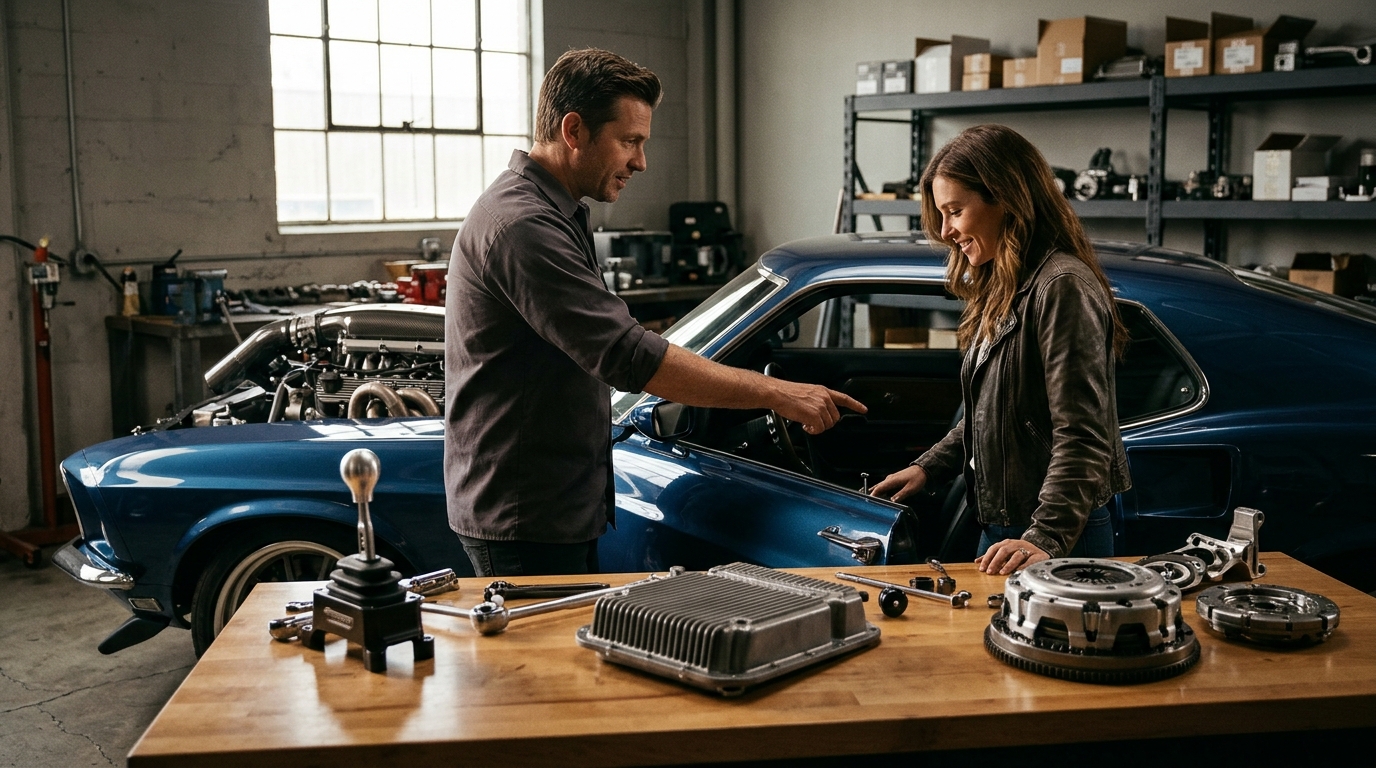
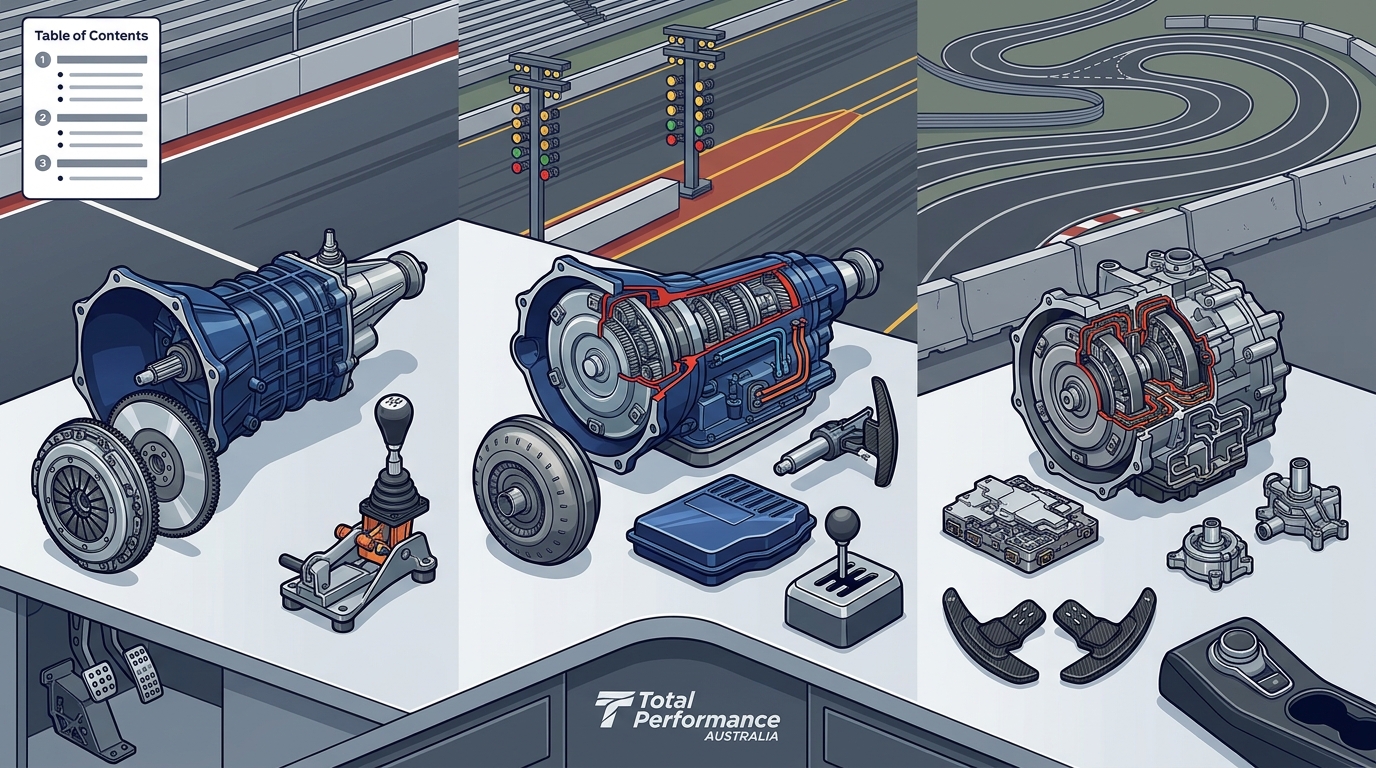
For Ford performance driving, the choice between manual, automatic, and dual-clutch transmissions (DCT) depends on your specific goals. Manuals offer maximum driver control and engagement, traditional automatics provide smooth, reliable power delivery with modern torque converters, and DCTs deliver the fastest possible shift times for track-focused applications. Total Performance Australia supplies the critical components needed to build or upgrade any of these drivetrain configurations for Ford platforms.
The Mechanical Reality of Manual Transmissions
A manual transmission is a mechanical gearbox that requires the driver to physically engage and disengage the clutch to change gears. In the context of Ford performance vehicles, such as the Mustang or F-150 Raptor, the manual option (often a 6-speed Getrag or Tremec unit) provides a direct, unmediated connection to the engine. The primary advantage is the driver's ability to manage engine braking and rev-matching, which is crucial for maintaining traction in high-power applications. However, the physical effort required to shift quickly can be a limiting factor in sustained high-RPM racing scenarios compared to electronic alternatives.
Modern Automatics and Torque Converter Technology
A modern automatic transmission is a computer-controlled gearbox that uses a torque converter to transfer power from the engine to the transmission without a mechanical clutch. For Ford performance builds, the 10-speed automatic (10R80) has revolutionized street performance by offering near-instantaneous shifts and a wide gear ratio spread. The torque converter allows the engine to rev up to a specific stall speed before locking up, which is ideal for launch control and smooth acceleration. This technology makes high-horsepower Fords significantly more drivable on the street while retaining serious performance capabilities.
Dual-Clutch Transmissions for Track Performance
Choosing the Right Drivetrain for Your Build
Selecting the correct transmission requires aligning your driving environment with the mechanical characteristics of the gearbox. If you primarily drive on public roads and want a car that is both fast and easy to live with, a modern automatic is often the superior choice. If you are a track-day enthusiast who values the tactile feedback of a clutch pedal and the ability to modulate power, a manual remains the gold standard. For those competing in time attack or circuit racing where every tenth of a second counts, a DCT provides the mechanical advantage needed to stay at the front of the pack.
Supporting Components for Ford Performance Builds
Regardless of the transmission type, the supporting components must be rated for the power levels of your engine. Total Performance Australia stocks a comprehensive range of Ford-specific parts, including components for Windsor, Cleveland, and Coyote platforms. When upgrading to a high-performance transmission, you will likely need to source specific Transmissions, Torque Converters & Flexplates to ensure compatibility. Additionally, proper Ford Transmissions & Torque Converters & Flexplates are essential for managing the increased torque loads in boosted applications.
Key Takeaways
- Modern automatics, particularly the 10-speed, provide the best balance of performance and daily drivability for high-horsepower Fords.
- Dual-clutch transmissions (DCT) deliver the fastest shift times and are the preferred choice for dedicated track racing and time attack.
- Torque converter stall speed is a critical factor in automatic and DCT performance, affecting launch capability and shift behavior.
- Supporting components like flexplates and torque converters must be matched to the specific transmission and engine combination.
- Total Performance Australia provides the necessary parts and expertise to support any Ford transmission build, from street to track.
Frequently Asked Questions
Is a DCT faster than a manual transmission?
Yes, in most performance scenarios, a DCT is faster than a manual because it can shift gears in milliseconds without interrupting power flow, whereas a manual requires the driver to lift off the throttle and operate the clutch.
Can I convert a Ford manual to an automatic?
What is the best transmission for a boosted Ford Coyote?
For boosted Coyote engines, a modern automatic with a high-stall torque converter is often recommended for its ability to handle high torque loads and provide smooth, rapid shifts.
Do DCTs require special maintenance?
Yes, DCTs require specific fluid changes and clutch inspections. The complexity of the system means that maintenance should be performed by a specialist familiar with the specific transmission model.
Where can I buy Ford transmission parts in Australia?
You can purchase a wide range of Ford transmission parts, including torque converters and flexplates, from Total Performance Australia, which specializes in high-performance components for Ford, Chevy, and Holden vehicles.
Conclusion
The right transmission for your Ford performance build depends on your primary use case. Whether you choose the engagement of a manual, the convenience of an automatic, or the speed of a DCT, ensuring you have the correct supporting components is vital. Total Performance Australia is your trusted source for high-quality Ford performance parts, offering expert advice and a vast inventory to help you achieve your driving goals. Learn more: Just a moment.