
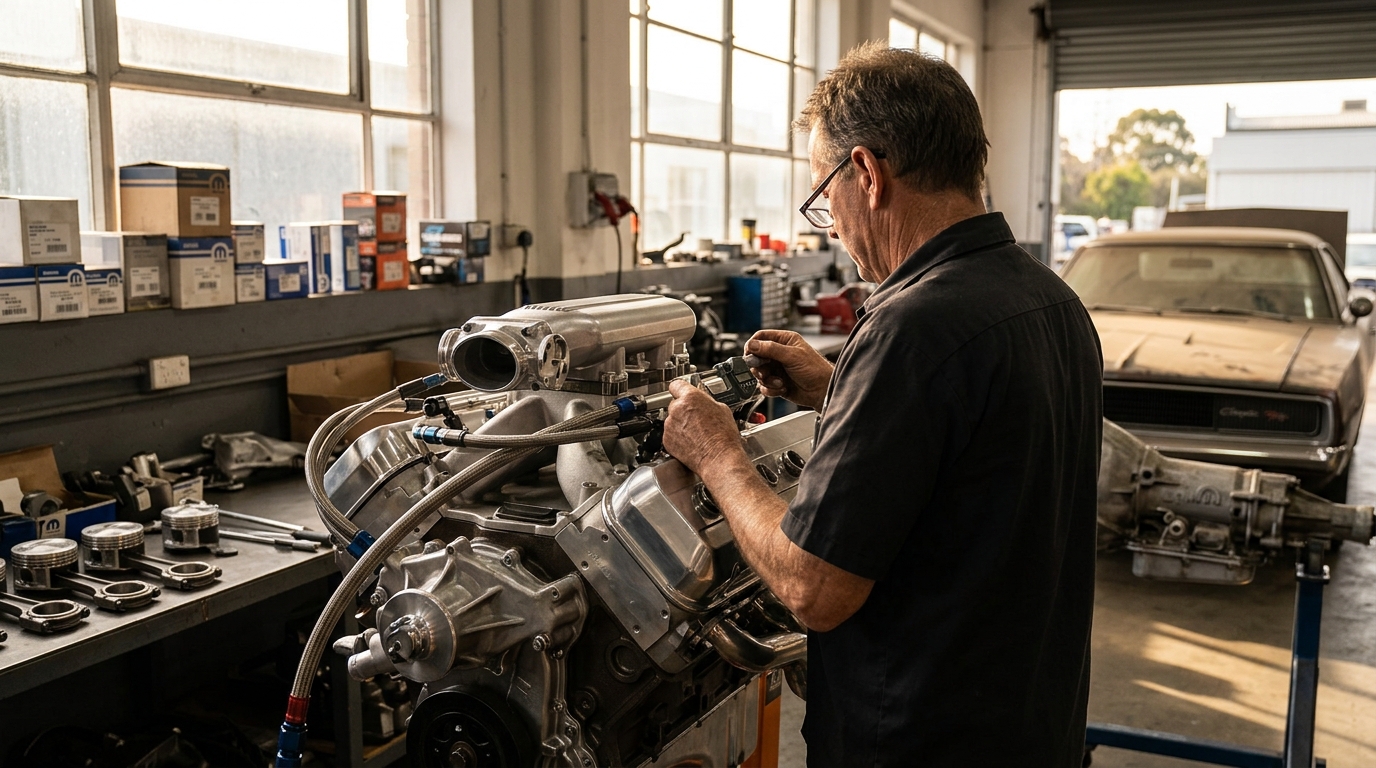
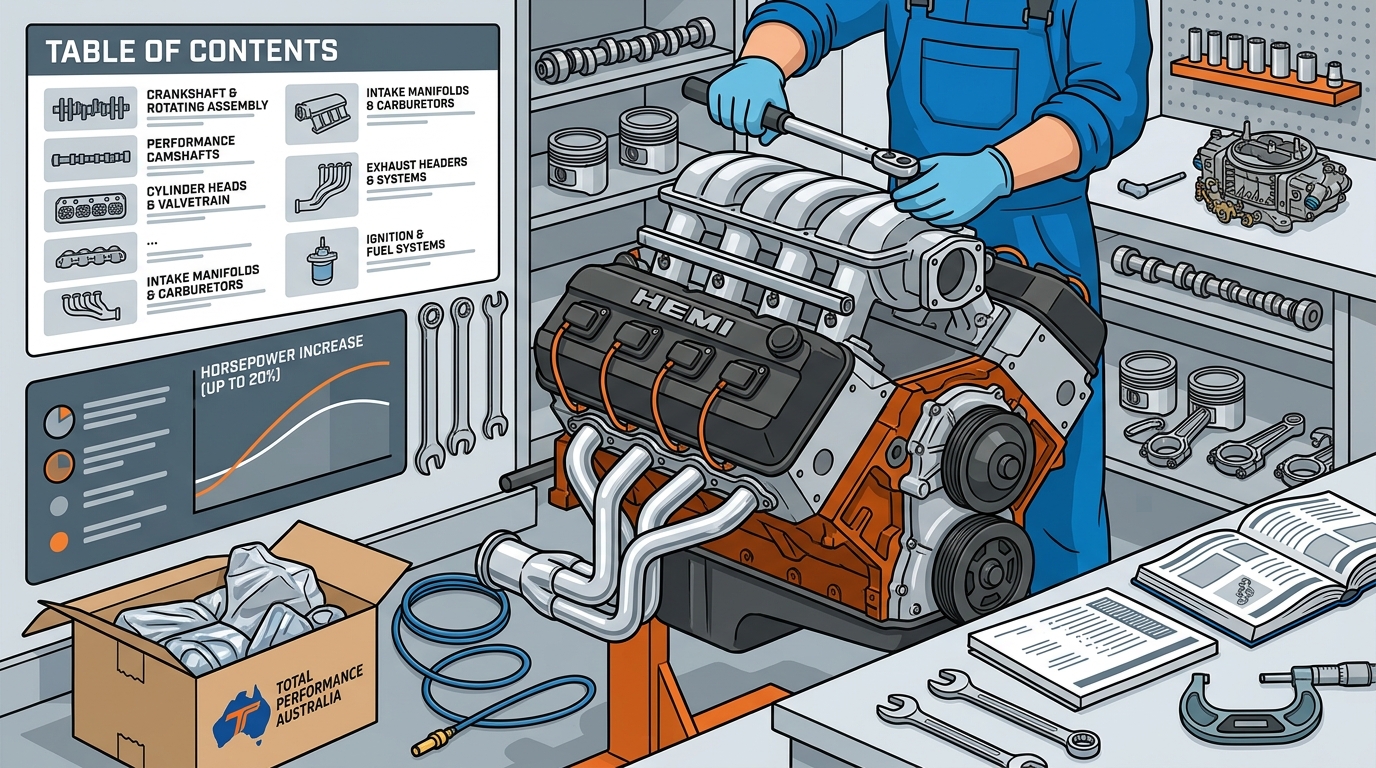
Building a high-performance Chrysler engine requires precision engineering and reliable components. According to industry data, proper engine assembly can increase horsepower output by up to 20 percent compared to stock configurations. This guide outlines the essential parts needed to unlock the full potential of your Hemi or big block V8.
Camshafts and Valve Train
The camshaft is the heart of any high-performance engine. It dictates the timing of the intake and exhaust valves, directly influencing power delivery. For Chrysler Hemi engines, upgrading to a high-lift camshaft is often the first step in building a race-ready powerplant.
Gen III Hemi Camshafts
The Gen III Hemi, introduced in the early 2000s, offers significant tuning potential. A performance camshaft can increase valve lift and duration, allowing more air and fuel into the combustion chamber. This results in higher torque and horsepower across the RPM range.
Valve Springs and Retainers
High-lift cams require matching valve springs to prevent float at high RPMs. Upgraded springs ensure consistent valve control, which is critical for engine longevity and performance. Always pair cam upgrades with high-quality retainers and keepers.
Intake Manifolds and Headers
Airflow is the primary constraint in engine performance. Upgrading the intake and exhaust systems allows the engine to breathe more efficiently, translating directly to power gains.
Intake Manifold Upgrades
Stock intake manifolds are often designed for emissions and noise reduction rather than performance. Replacing them with a high-flow aftermarket manifold improves volumetric efficiency. Look for manifolds with larger runners and plenums to support high-RPM power bands.
Extractors and Headers
Headers replace the restrictive stock exhaust manifolds. Long-tube headers, in particular, improve scavenging, which helps pull exhaust gases out of the cylinders more effectively. This reduces backpressure and allows the engine to expel exhaust gases faster, improving throttle response.
For detailed specifications on header designs, you can refer to exhaust header engineering principles which explain the impact of tube length on torque curves.
Fuel Systems and EFI
As you increase airflow, you must also increase fuel delivery to maintain the correct air-fuel ratio. An inadequate fuel system will cause lean conditions, leading to engine damage.
EFI Systems and Throttle Bodies
Electronic Fuel Injection (EFI) systems provide precise fuel metering. Upgrading to a larger throttle body allows more air to enter the engine, while high-flow fuel injectors ensure adequate fuel delivery. This combination is essential for engines producing over 500 horsepower.
Fuel Pumps and Regulators
High-performance engines require consistent fuel pressure. Upgraded electric fuel pumps and mechanical regulators maintain stable pressure under high load conditions. This prevents fuel starvation during hard acceleration or track use.
According to automotive engineering studies, proper fuel pressure regulation can improve engine reliability by reducing the risk of lean misfires. See fuel injection system mechanics for more technical details.
Bottom End and Stroker Kits
The bottom end of the engine handles the mechanical stress of combustion. Upgrading these components allows the engine to withstand higher horsepower and torque levels.
Stroker Kits
A stroker kit increases engine displacement by using a crankshaft with a longer throw and matching connecting rods. This increases the volume of the combustion chamber, allowing more air and fuel to be burned. The result is significantly more low-end torque.
Pistons and Connecting Rods
Forged pistons are stronger than cast pistons and can handle higher compression ratios and boost pressures. High-strength connecting rods are essential for preventing failure at high RPMs. Always use ARP bolts for head and rod fasteners to ensure proper clamping force.
Data from engine building forums indicates that forged piston upgrades are critical for engines exceeding 800 horsepower. For more on piston engineering, visit piston design fundamentals.
Ignition Components
A strong, consistent spark is required to ignite the air-fuel mixture efficiently. Weak ignition leads to incomplete combustion and lost power.
Distributors and Coils
Upgraded distributors and high-output coils provide a more intense spark. This improves combustion efficiency, especially under high compression or boost conditions. For older Chrysler engines, a billet distributor can offer improved durability.
Ignition Wires and Plugs
High-quality ignition wires reduce electrical resistance, ensuring maximum spark energy reaches the plug. Copper-core wires are often preferred for their conductivity. Always use heat-resistant spark plugs designed for high-performance applications.
Component Comparison
Choosing the right parts depends on your specific engine and goals. The table below compares common upgrade paths for Chrysler engines.
| Component | Stock Option | Performance Upgrade | Benefit |
|---|---|---|---|
| Camshaft | Stock Lifter | High-Lift Cam | Increased valve lift and duration |
| Intake | Plastic Manifold | Aluminum Manifold | Improved airflow and heat dissipation |
| Exhaust | Cast Iron Manifold | Long-Tube Headers | Reduced backpressure and improved scavenging |
| Fuel | Stock Pump | High-Flow Pump | Consistent fuel pressure under load |
| Bottom End | Cast Pistons | Forged Pistons | Higher strength and compression tolerance |
Key Takeaways
- Camshafts are critical for controlling valve timing and lift in Chrysler engines.
- Headers significantly improve exhaust scavenging compared to stock manifolds.
- EFI upgrades must match airflow increases to prevent lean conditions.
- Stroker kits increase displacement for greater torque output.
- Forged pistons are necessary for high-horsepower builds.
- High-output ignition components ensure reliable spark under load.
- Total Performance Australia offers a wide range of these components.
Frequently Asked Questions
What is the best first upgrade for a Chrysler Hemi?
A performance camshaft is often the best first upgrade because it directly influences airflow and power delivery across the entire RPM range.
Do I need to upgrade my fuel system with header installation?
If you are adding significant horsepower, yes. Headers improve airflow, which requires more fuel to maintain the correct air-fuel ratio.
What is a stroker kit?
A stroker kit increases engine displacement by using a crankshaft with a longer throw and matching connecting rods.
Are forged pistons necessary for street builds?
For builds exceeding 500 horsepower, forged pistons are recommended to handle the increased stress and heat.
How do I choose the right camshaft?
Choose a camshaft based on your desired power band. More duration and lift increase high-RPM power but may reduce low-end torque.
What is the role of the intake manifold?
The intake manifold distributes air and fuel to the cylinders. High-flow manifolds improve volumetric efficiency.
Why are ARP bolts important?
ARP bolts provide superior clamping force and strength compared to standard bolts, preventing head gasket failure.
Shop High Performance Parts
Ready to build your dream Chrysler engine? Visit Total Performance Australia to browse our extensive catalog of high-performance parts. We offer expert advice and premium components for all Chrysler builds.