
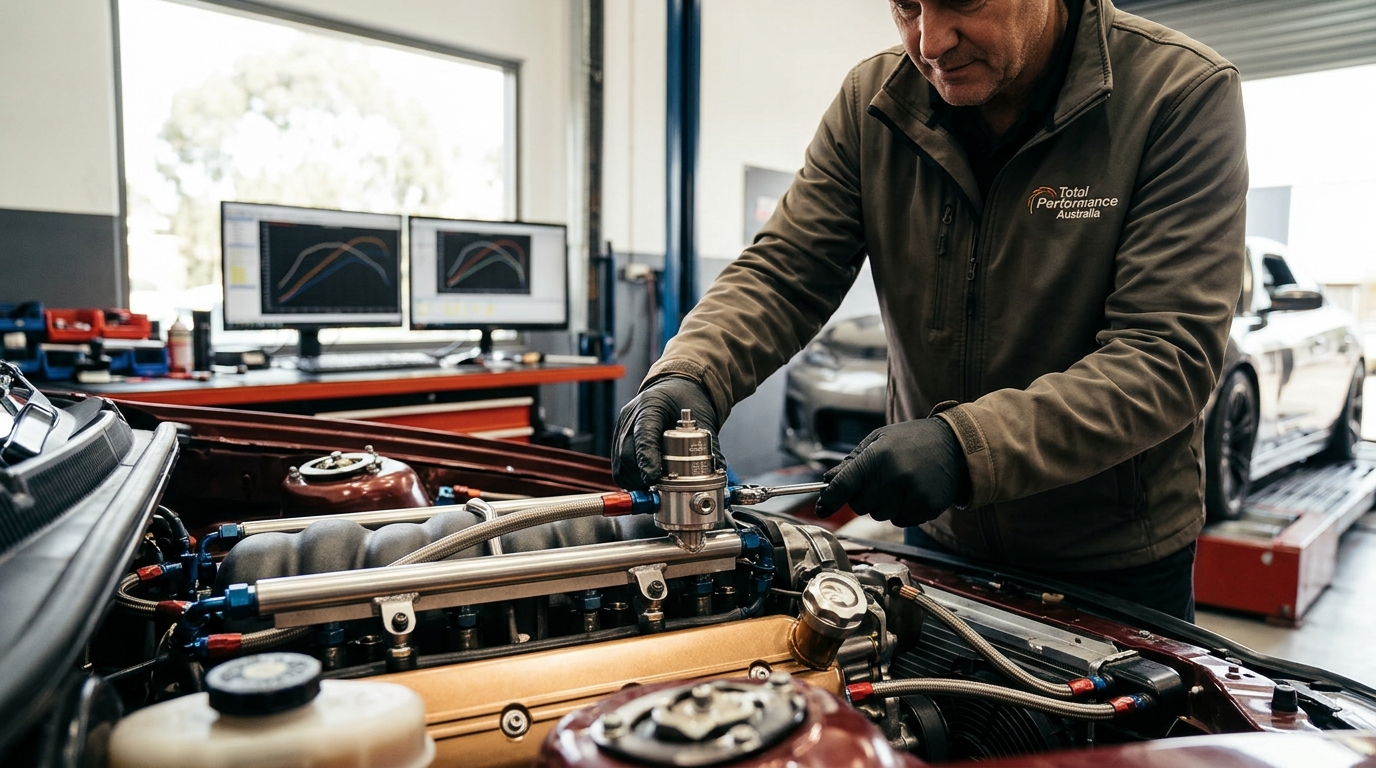
A fuel pressure regulator is a mechanical or electronic device that maintains a constant fuel pressure at the injectors or carburetor. It ensures the engine receives the exact amount of fuel needed for optimal combustion. Total Performance Australia provides these critical components for high-performance builds across Australia.
Defining the Fuel Pressure Regulator
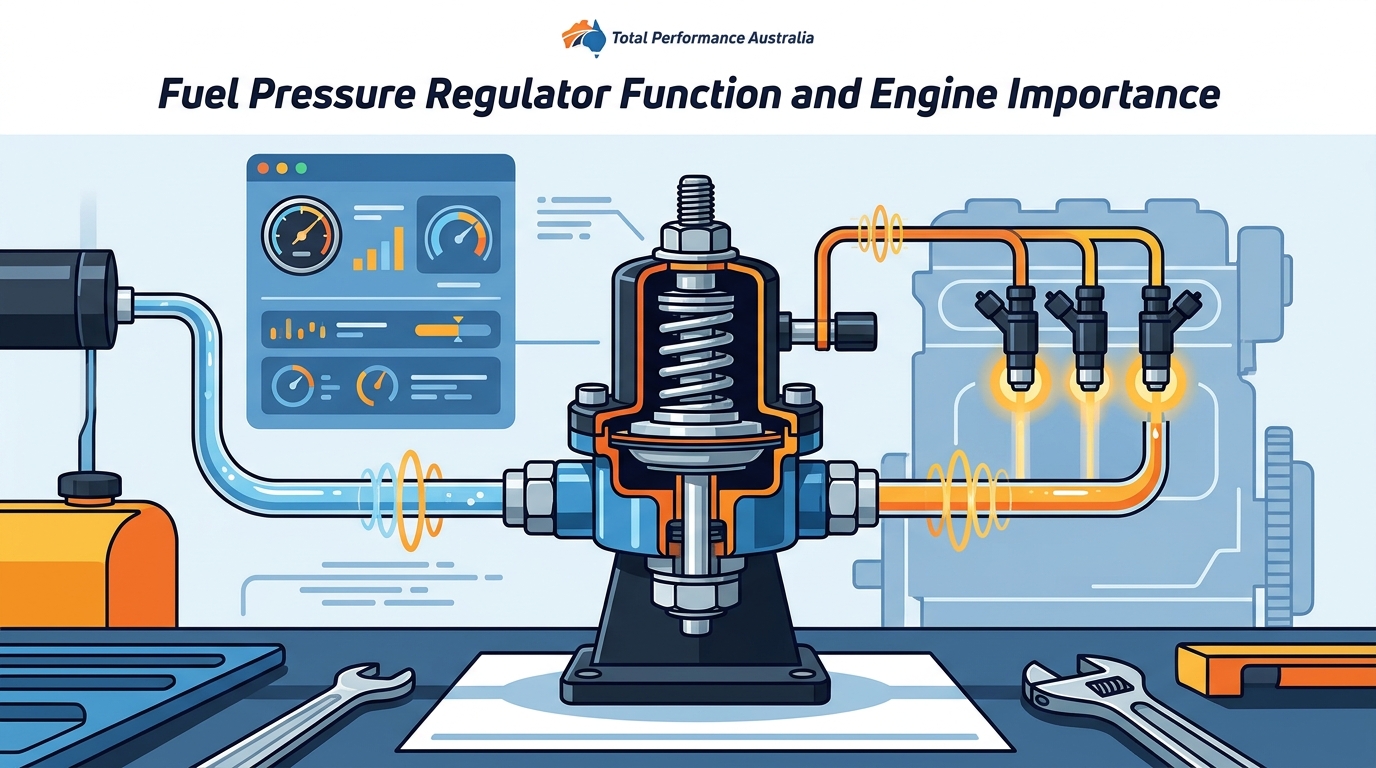
A fuel pressure regulator is a valve that controls the pressure of fuel delivered to the engine's fuel system. It works by balancing the fuel pressure against a spring or electronic signal. This balance ensures that the fuel pressure remains stable regardless of the pump's output or the engine's load.
In a carbureted system, the regulator often maintains a specific pressure, such as 3 to 10 psi, to prevent flooding. In an electronic fuel injection (EFI) system, it maintains a higher pressure, often between 25 and 60 psi. The regulator is typically located near the fuel rail or the carburetor. It is a small but vital component in the fuel delivery chain.
How the Regulator Controls Pressure
The regulator uses a diaphragm to sense the pressure in the fuel line. When the pressure rises above the set point, the diaphragm pushes against a spring. This action opens a valve that allows excess fuel to return to the fuel tank. When the pressure drops, the spring pushes the diaphragm back, closing the valve.
This mechanism ensures that the fuel pressure remains constant. It prevents the engine from running too rich or too lean. A consistent pressure is essential for accurate fuel metering. The regulator acts as a safety valve for the fuel system.
Why Pressure Stability Matters for Performance
Stable fuel pressure is critical for engine performance and reliability. If the pressure fluctuates, the engine may run lean under load. This can cause detonation and damage the engine. Conversely, if the pressure is too high, the engine may run rich. This leads to poor throttle response and increased fuel consumption.
Types of Regulators for Different Systems
Some regulators are boost-referenced. These adjust the fuel pressure based on the intake manifold pressure. This is essential for turbocharged or supercharged engines. A boost-referenced regulator ensures that the fuel pressure increases as the boost pressure increases. This maintains the correct fuel-to-air ratio under boost.
Identifying Regulator Failure
A failing fuel pressure regulator can cause several symptoms. The most common symptom is a rough idle. The engine may stall or hesitate under acceleration. You may also notice a fuel smell in the engine bay. This indicates that fuel is leaking past the regulator's diaphragm.
Another sign of failure is a drop in fuel pressure. This can be measured with a fuel pressure gauge. If the pressure drops below the specified range, the regulator may be faulty. Replacing the regulator is a simple and inexpensive fix. It can restore the engine's performance and reliability.
Key Takeaways
- A fuel pressure regulator is a device that maintains constant fuel pressure at the injectors or carburetor.
- It ensures the engine receives the exact amount of fuel needed for optimal combustion.
- Stable fuel pressure is critical for engine performance and reliability.
- Carbureted regulators maintain low pressures, while EFI regulators maintain higher pressures.
- Boost-referenced regulators are essential for turbocharged or supercharged engines.
- A failing regulator can cause a rough idle, stalling, or a fuel smell.
- Total Performance Australia stocks a wide range of regulators for various engine types.
Frequently Asked Questions
What is the typical fuel pressure for a carbureted engine?
Most carbureted engines require a fuel pressure between 3 and 10 psi. The exact pressure depends on the carburetor model. Always consult the carburetor manufacturer's specifications.
What is the typical fuel pressure for an EFI engine?
Most EFI engines require a fuel pressure between 25 and 60 psi. The exact pressure depends on the injector type and the ECU calibration. Always consult the ECU manufacturer's specifications.
Can a fuel pressure regulator be adjusted?
Yes, many fuel pressure regulators are adjustable. You can adjust the pressure by turning a screw on the regulator. Use a fuel pressure gauge to monitor the pressure while adjusting.
Do I need a boost-referenced regulator for a turbocharged engine?
Yes, a boost-referenced regulator is essential for turbocharged engines. It ensures that the fuel pressure increases as the boost pressure increases. This maintains the correct fuel-to-air ratio under boost.
How often should I replace my fuel pressure regulator?
There is no fixed interval for replacing a fuel pressure regulator. Replace it if you notice symptoms of failure, such as a rough idle or a fuel smell. Regular inspection can help identify potential issues early.
Conclusion
The fuel pressure regulator is a small but vital component in your engine's fuel system. It ensures that the engine receives the correct amount of fuel at all times. By maintaining stable fuel pressure, it protects your engine and optimizes performance. Total Performance Australia offers a wide range of fuel pressure regulators for various engine types. Visit our store to find the right regulator for your build. Learn more: Total Performance is Melbourne.