

Selecting the Right Fuel System Upgrade for Your Ford or Chevy V8
Modern high-performance V8 engines demand precise fuel delivery to unlock their full potential. According to recent industry data, a properly upgraded fuel system can increase horsepower by 15 to 20 percent in naturally aspirated applications and significantly more in forced induction setups. This guide explores the critical components required for Ford and Chevy V8 engines, ensuring your vehicle receives the necessary fuel pressure and volume to support increased power levels safely and efficiently.
Understanding Fuel Delivery Requirements
Fuel delivery is the backbone of any performance build. Without adequate fuel flow, your engine will run lean, leading to catastrophic engine failure. The primary metric for fuel system capacity is flow rate, typically measured in pounds per hour (lb/hr) or gallons per hour (GPH). Fuel pressure is the force that pushes fuel through the injectors. Higher pressure allows more fuel to be delivered in a given time, which is crucial for high-horsepower applications.
When calculating your needs, you must consider the engine's displacement, compression ratio, boost pressure (if applicable), and target horsepower. A general rule of thumb is to calculate the required injector flow based on the brake specific fuel consumption (BSFC) of the fuel type. For example, gasoline typically has a BSFC of 0.4 to 0.5, meaning you need 0.4 to 0.5 pounds of fuel per horsepower per hour. This calculation ensures that your fuel system can keep up with the engine's demand under full load.
Ford vs. Chevy Platform Differences
Ford and Chevrolet V8 engines have distinct architectures that influence fuel system design. Ford's Coyote and Boss engines often utilize direct injection or port injection systems that require high-pressure fuel pumps (HPFP) mounted on the engine. Fuel pressure regulators are critical for maintaining consistent pressure. In contrast, Chevy's LS and LT platforms are renowned for their simplicity and aftermarket support. The LS series typically uses a return-style fuel system with a mechanical or electric fuel pump, while the newer LT engines incorporate direct injection similar to Ford's modern setups.
Understanding these differences is vital when selecting components. For instance, a fuel pump designed for an LS engine may not fit or function correctly in a Coyote application without significant modification. Additionally, the fuel rail design varies between manufacturers, affecting injector compatibility and mounting hardware. Always verify the specific engine model and year before purchasing components to ensure proper fitment and performance.
Fuel Pump Options and Specifications
The fuel pump is the heart of your fuel system. Upgrading from the stock pump is often the first step in a performance build. There are two main types of aftermarket fuel pumps: in-tank and external high-pressure pumps. In-tank pumps are easier to install and maintain, while external pumps offer higher flow rates and better cooling.
| Pump Type | Best For | Pros | Cons |
|---|---|---|---|
| In-Tank Lift Pump | Street/Strip Builds | Easy Installation, Quiet | Limited Flow for High HP |
| External High-Pressure Pump | Forced Induction | High Flow, Reliable | Complex Installation |
| Dual Pump Setup | Extreme Power Levels | Maximum Redundancy | High Cost, Space Required |
When selecting a pump, look for brands known for reliability and performance, such as Aeromotive, Walbro, or Bosch. Ensure the pump's flow rate exceeds your calculated requirements by at least 15 to 20 percent to account for future power gains and system inefficiencies.
Fuel Injector Selection Criteria
Fuel injectors control the precise amount of fuel delivered to each cylinder. Upgrading injectors is necessary when increasing horsepower beyond the stock capacity. Injector size is measured in cc/hr (cubic centimeters per hour). Fuel injector sizing must match the engine's airflow. Selecting the correct size involves calculating the required flow based on your target horsepower and the fuel type.
For naturally aspirated engines, a 10 to 15 percent duty cycle at wide-open throttle is ideal. This ensures the injectors are not maxed out, allowing for quick response and longevity. In forced induction applications, duty cycles can be higher, but it is still wise to avoid running injectors at 100 percent capacity. Consider the injector's flow curve and spray pattern, as these factors affect atomization and combustion efficiency.
Regulator and Line Upgrades
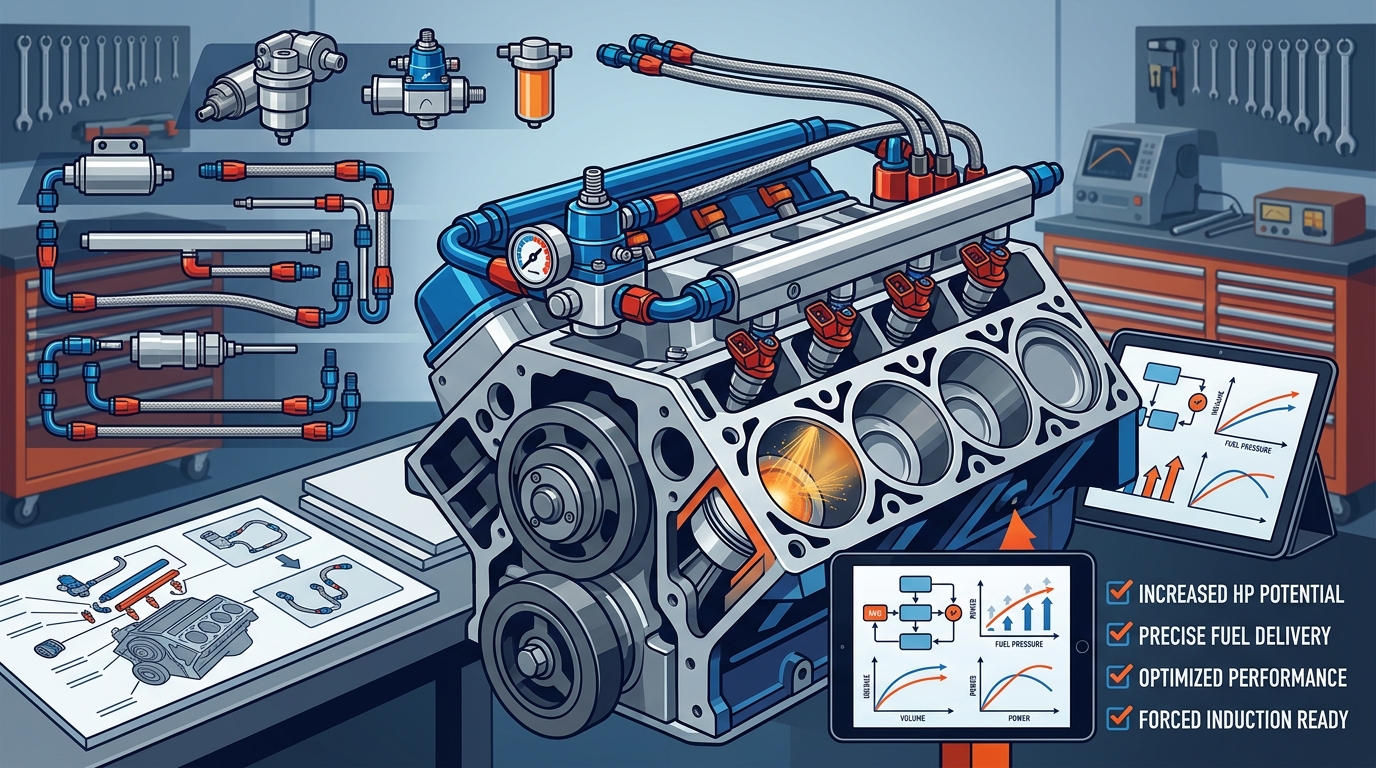
A fuel pressure regulator (FPR) maintains consistent pressure regardless of engine load. Upgrading to an adjustable regulator allows you to fine-tune pressure for optimal performance. Fuel lines must withstand high pressure without expanding. Stock rubber lines can expand under high pressure, leading to pressure drops and inconsistent fuel delivery. Upgrading to braided stainless steel lines ensures that pressure remains stable and responsive.
Additionally, consider upgrading the fuel filter to a high-flow unit to prevent restriction. A clogged filter can starve the engine of fuel, leading to power loss and potential damage. Regular maintenance of the fuel system, including checking for leaks and ensuring proper grounding, is essential for long-term reliability.
Tuning and Calibration
Upgrading your fuel system is only half the battle. Proper tuning is required to realize the benefits of new components. A professional tuner will adjust fuel maps, ignition timing, and other parameters to optimize performance and safety. Fuel system upgrades require corresponding tuning adjustments. Without proper tuning, you risk running lean, which can cause engine knock and severe damage.
Modern tuning software allows for real-time data logging, enabling tuners to monitor fuel pressure, injector duty cycle, and air-fuel ratios. This data is crucial for making precise adjustments and ensuring the engine operates within safe limits. Always work with a reputable tuner who has experience with your specific engine platform.
Key Takeaways
- Calculate fuel requirements based on horsepower and BSFC to ensure adequate flow.
- Ford and Chevy platforms have distinct fuel system architectures requiring specific components.
- Upgrading to a high-flow fuel pump is essential for supporting increased power levels.
- Select injectors with a 10-15 percent duty cycle margin at wide-open throttle.
- Use braided stainless steel lines to prevent pressure expansion and ensure stability.
- Professional tuning is mandatory to optimize performance and prevent engine damage.
- Regular maintenance of fuel filters and lines ensures long-term reliability.
Frequently Asked Questions
How do I calculate the right fuel injector size?
Use the formula: Injector Flow (lb/hr) = (Target HP x BSFC) / (Number of Injectors x Peak Duty Cycle). For gasoline, use a BSFC of 0.4 to 0.5.
Can I use a stock fuel pump for mild power increases?
For mild increases under 100 horsepower, the stock pump may suffice, but upgrading is recommended for reliability and future-proofing.
What is the difference between a return and returnless fuel system?
A return system sends excess fuel back to the tank, while a returnless system uses a regulator in the tank or rail to maintain pressure without returning fuel.
Do I need a fuel pressure gauge?
Yes, a fuel pressure gauge is essential for monitoring system performance and diagnosing issues during tuning and operation.
How often should I replace my fuel filter?
It is recommended to replace the fuel filter every 30,000 to 50,000 miles, or sooner if you notice performance issues.
What is the best fuel pump brand for performance?
Brands like Aeromotive, Walbro, and Bosch are widely regarded as top choices for reliability and performance in the aftermarket.
Can I tune my car myself?
While possible, professional tuning is highly recommended to ensure safety and optimal performance, especially for significant upgrades.
Contact Total Performance
Ready to upgrade your Ford or Chevy V8 fuel system? Total Performance offers expert advice and high-quality components to help you achieve your performance goals. Visit our services page to learn more about our offerings. Contact our team today to discuss your build and get personalized recommendations. We are dedicated to helping you maximize your engine's potential with precision and reliability.