
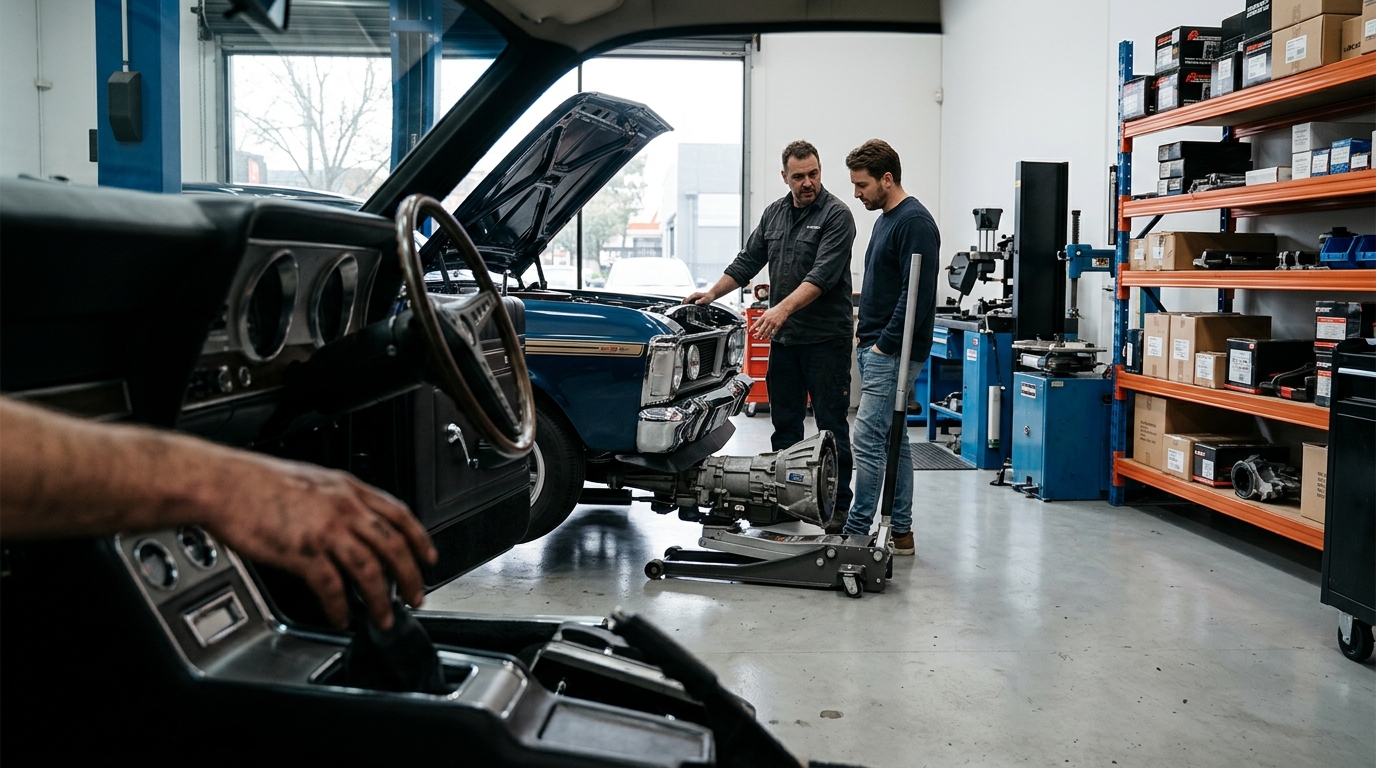
Common Ford Transmission Selection Mistakes and How to Avoid Them
Selecting the wrong transmission for a Ford vehicle is a costly error that can derail performance goals and void warranties. According to industry data, improper gear ratio matching accounts for a significant percentage of aftermarket drivetrain failures in high-torque applications. This guide outlines the critical technical errors builders make when upgrading or replacing Ford transmissions and provides the precise solutions needed to ensure reliability.
Understanding Ford Transmission Types
Ford has utilized a diverse array of transmission architectures over the decades. A transmission is a mechanical device that transmits power from the engine to the drive wheels, allowing the vehicle to change speed and direction. Builders often confuse the internal components of different generations, leading to incorrect part selection.
For example, the Ford C4 and C6 transmissions are iconic in the muscle car era, but they are not interchangeable without significant modification. The C4 is a compact three-speed unit, while the C6 is a larger, more robust three-speed designed for higher torque loads. Understanding the physical dimensions and bellhousing patterns is the first step in avoiding selection errors.
Modern Ford vehicles, such as those with the Coyote V8 or the EcoBoost engines, utilize complex automatic transmissions like the 6R80 or 10R80. These units require specific electronic control modules and wiring harnesses. Selecting a manual transmission swap for a modern Ford requires careful consideration of the ECU programming and clutch pedal assembly compatibility. (Total Performance Australia buy)
The Gear Ratio Mismatch Error
One of the most frequent mistakes is ignoring the final drive ratio in the differential. The overall gear ratio is calculated by multiplying the transmission gear ratio by the differential ring and pinion ratio. If you install a transmission with a tall first gear into a car with a 4.10 rear end, you may experience sluggish acceleration off the line.
Conversely, a very low first gear in a street car can make daily driving difficult due to frequent shifting. According to automotive engineering principles, the ideal first gear ratio depends on the tire size, rear end ratio, and intended use. For drag racing, a lower number is preferred. For highway cruising, a higher overdrive ratio is essential for fuel efficiency.
When selecting a transmission, always calculate the overall first gear ratio. This ensures that the engine stays in its power band during launch. A mismatch here can render a powerful engine feel weak and unresponsive. Always consult a gear ratio calculator before finalizing your purchase.
Overlooking Torque Capacity Limits
Every transmission has a maximum torque capacity. Exceeding this limit will result in internal component failure, such as broken planetary gears or snapped shafts. A torque converter is a fluid coupling that transfers engine rotation to the transmission input shaft, multiplying torque during acceleration.
Many builders upgrade their engine to produce 600 horsepower but keep the stock transmission. This is a recipe for disaster. The stock clutches and bands are not designed to handle the increased torque output. You must upgrade the transmission or select a heavy-duty aftermarket unit.
When evaluating torque capacity, look for specifications from reputable manufacturers. Total Performance offers a range of high-performance parts designed to handle increased loads. Always err on the side of caution. If your engine produces 500 lb-ft of torque, do not select a transmission rated for only 400 lb-ft. The margin of safety is critical for longevity.
Neglecting Transmission Cooling Systems
Heat is the number one enemy of automatic transmissions. Many builders fail to install an auxiliary transmission cooler when upgrading to a high-performance unit. A transmission cooler is a heat exchanger that lowers the temperature of the transmission fluid to prevent overheating.
High-performance driving generates significant heat. Without adequate cooling, the fluid breaks down, losing its lubricating properties. This leads to accelerated wear on clutches and bearings. According to fluid dynamics studies, transmission fluid temperature increases exponentially with load and speed.
Always install a transmission cooler sized for your specific application. For track use, a large plate-and-fin cooler is recommended. For street use, a tube-and-fin cooler may suffice. Ensure the cooler lines are routed away from exhaust components to prevent heat soak. This simple step can double the life of your transmission.
Compatibility and Mounting Issues
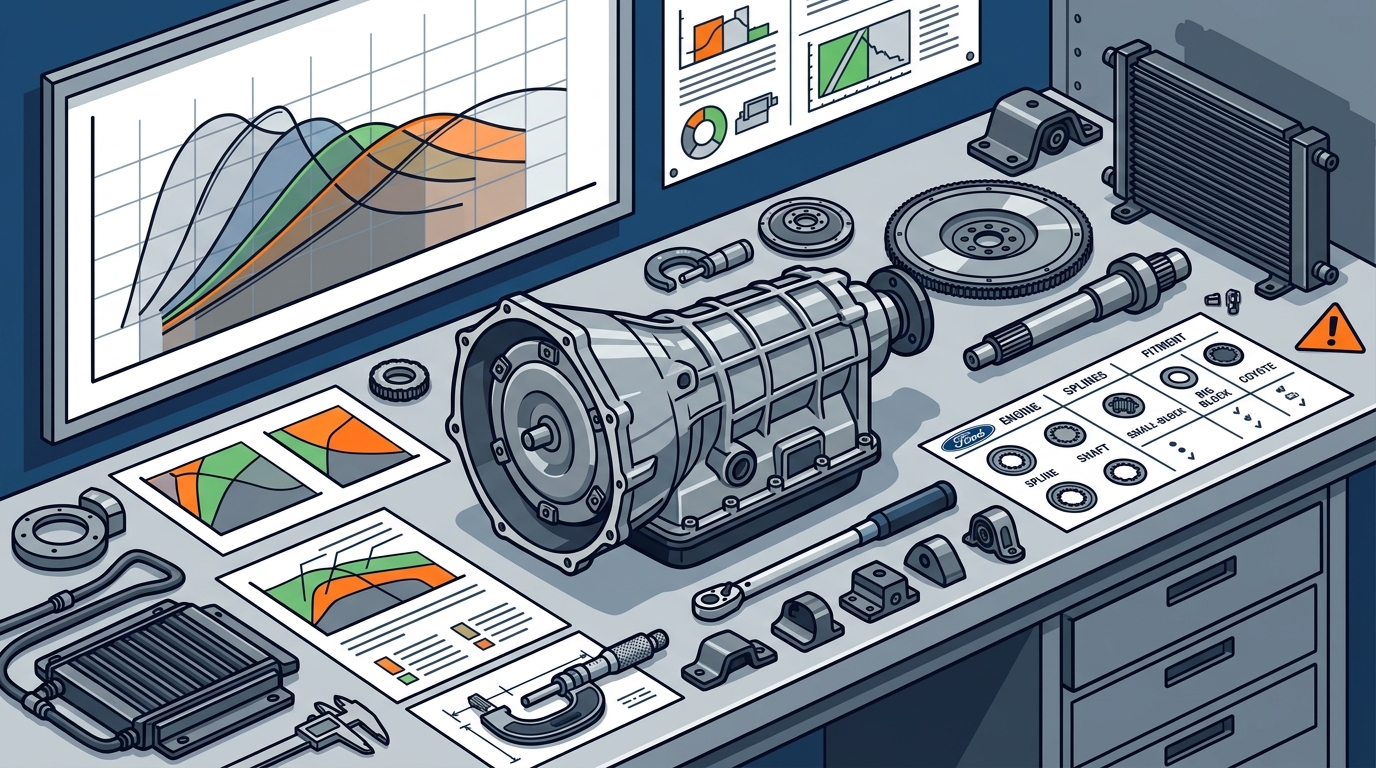
Physical compatibility is often overlooked. The transmission must match the engine bellhousing pattern, the starter location, and the crossmember mounts. A common mistake is assuming that all Ford transmissions use the same bellhousing pattern.
For instance, the Ford 302 Windsor and the 351C Cleveland have different bellhousing patterns. Installing a transmission from one engine family to the other without an adapter plate will not work. Always verify the bellhousing pattern before purchasing.
Additionally, consider the shift linkage. Some transmissions require a specific shift lever or cable. If the linkage does not align with your shifter, you will need to fabricate custom components. This adds cost and complexity to the build. Check the mounting points and linkage requirements early in the planning process.
Comparison of Transmission Options
Selecting the right transmission depends on your goals. Below is a comparison of common Ford transmission options.
| Transmission Model | Type | Best For | Torque Capacity |
|---|---|---|---|
| Ford C4 | Automatic | Light duty, classic builds | 300 lb-ft |
| Ford C6 | Automatic | High torque, muscle cars | 500 lb-ft |
| 4R70W | Automatic | Modern V8, towing | 600 lb-ft |
| T56 Magnum | Manual | High performance, racing | 600 lb-ft |
Key Takeaways
- Always calculate the overall gear ratio to ensure proper acceleration and cruising.
- Verify the torque capacity of the transmission matches or exceeds your engine output.
- Install an auxiliary transmission cooler to prevent heat-related failures.
- Check bellhousing patterns and mounting points for physical compatibility.
- Use high-quality transmission fluid and filters to maintain system health.
- Consult with experts at Total Performance for specific part recommendations.
- Consider the intended use of the vehicle when selecting gear ratios.
Frequently Asked Questions
What is the most common transmission mistake?
The most common mistake is ignoring the torque capacity of the transmission relative to the engine output.
Do I need a transmission cooler?
Yes, especially for high-performance builds or towing, as heat degrades transmission fluid rapidly.
Can I swap a C6 into a Ford Mustang?
Yes, but you must ensure the bellhousing pattern and crossmembers are compatible with your specific model year.
What is the difference between a C4 and a C6?
The C6 is larger and has a higher torque capacity than the compact C4, making it better for high-power applications.
How do I choose the right gear ratio?
Choose a gear ratio based on your tire size, rear end ratio, and whether you prioritize acceleration or highway cruising.
Are aftermarket transmissions reliable?
Yes, reputable aftermarket transmissions are often more reliable than stock units when built to handle increased power.
What fluid should I use?
Use the fluid specification recommended by the transmission manufacturer, such as Mercon V or Type F.
Get Your Transmission Today
Avoid costly mistakes by choosing the right transmission for your Ford. Visit Total Performance to explore our extensive inventory of Ford transmission parts, torque converters, and cooling systems. Our experts are ready to help you build a reliable and high-performance drivetrain.