
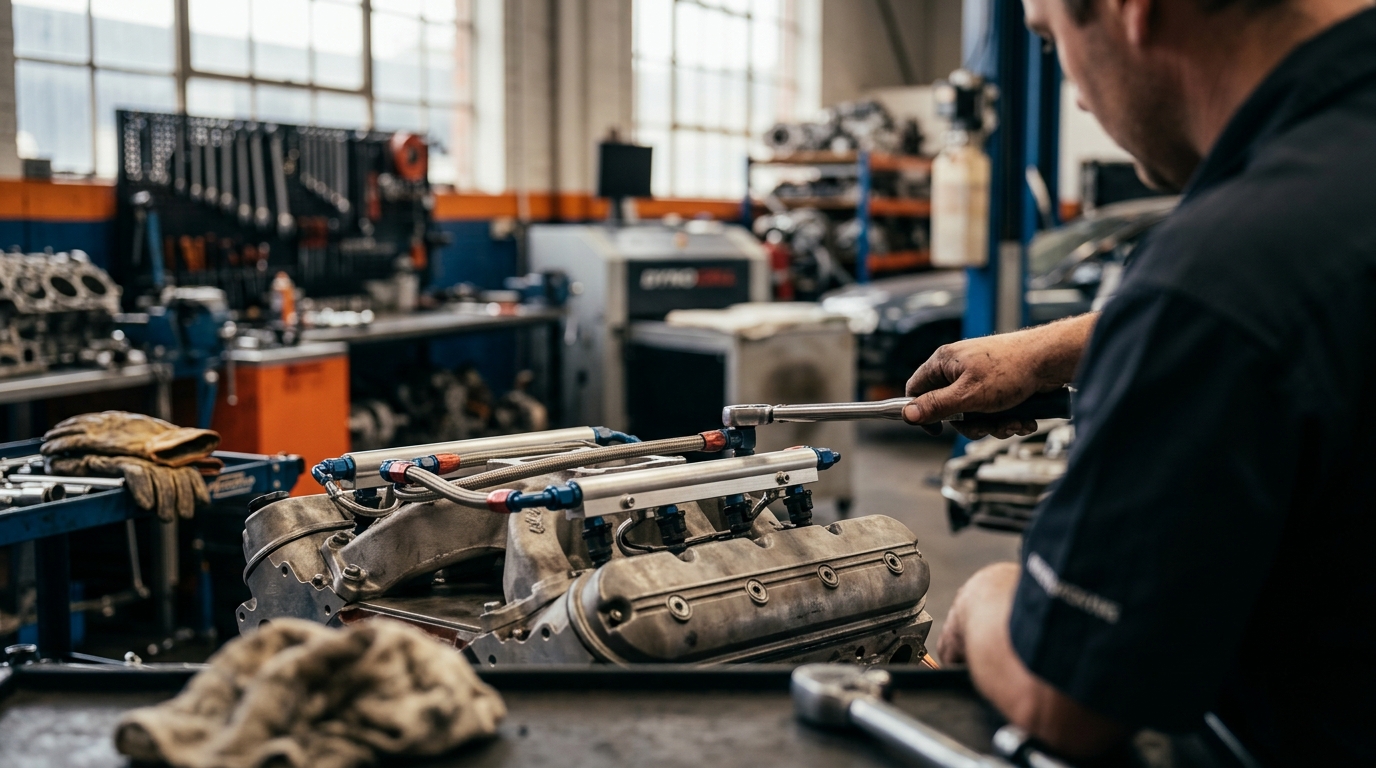
Upgrading the fuel delivery system is the single most critical step in unlocking the true potential of a modified Ford or Chevrolet engine. However, data from industry performance benchmarks indicates that nearly 40 percent of high-horsepower engine failures are directly linked to fuel starvation or improper pressure regulation. When you increase horsepower, you exponentially increase fuel demand. If the system cannot keep pace, the engine runs lean, leading to catastrophic piston and valve damage. This guide outlines the most frequent engineering errors made during these upgrades and provides the exact protocols to avoid them.
Understanding Fuel Delivery Dynamics
Before touching a wrench, you must understand the fundamental physics of your engine's requirements. Fuel pressure is the force that pushes fuel through the injectors to maintain the correct air-fuel ratio. In modern Ford and Chevrolet platforms, this pressure is not static. It changes dynamically based on engine load, RPM, and manifold vacuum.
Many enthusiasts mistakenly believe that a larger tank or a bigger pump alone solves all problems. This is false. The entire system must work as a cohesive unit. If the pump cannot move enough volume, or if the lines restrict flow, the injectors will cavitate. Cavitation occurs when vapor bubbles form in the liquid fuel due to low pressure. These bubbles collapse violently, destroying the pump internals and starving the engine of fuel during hard acceleration.
For high-performance applications, the goal is to maintain a consistent pressure curve. This requires precise calculation of fuel flow rates, measured in pounds per hour (LPH) or gallons per hour (GPH). You must calculate your required flow based on your target horsepower and the specific fuel type you are using. Ethanol blends require significantly more flow than pure gasoline. (Just a moment)
Fuel Pump Selection Errors
The most common mistake is underestimating the fuel pump's capacity. Enthusiasts often select a pump that meets the requirements for 500 horsepower when they are building an engine for 800 horsepower. This margin of error leaves no room for future modifications or degraded system components.
Internal vs. External Pump Placement
Another critical error involves the placement of the pump. In Ford platforms, particularly the Mustang and F-150, the fuel pump is located inside the tank. In many Chevrolet trucks and SUVs, the pump is also internal. Moving to an external high-pressure pump or a dual-pump setup is often necessary for extreme builds.
When upgrading to an external pump, you must ensure the pump is mounted below the fuel level of the tank. If the pump is mounted above the tank, it must be a self-priming unit capable of pulling fuel against gravity. Failure to do this results in vapor lock, where the fuel boils in the lines before it even reaches the engine.
Flow Rate vs. Pressure Rating
Do not confuse pressure with flow. A pump might be rated for 100 PSI, but if it cannot deliver the required volume at that pressure, it is useless for high-horsepower applications. Always check the flow curve of the pump. Look for the flow rate at the specific operating pressure your engine will require. For example, a pump might deliver 200 LPH at 40 PSI, but only 120 LPH at 60 PSI. Your engine might need 150 LPH at 60 PSI, making that pump a poor choice.
Pressure Regulation and Return Lines
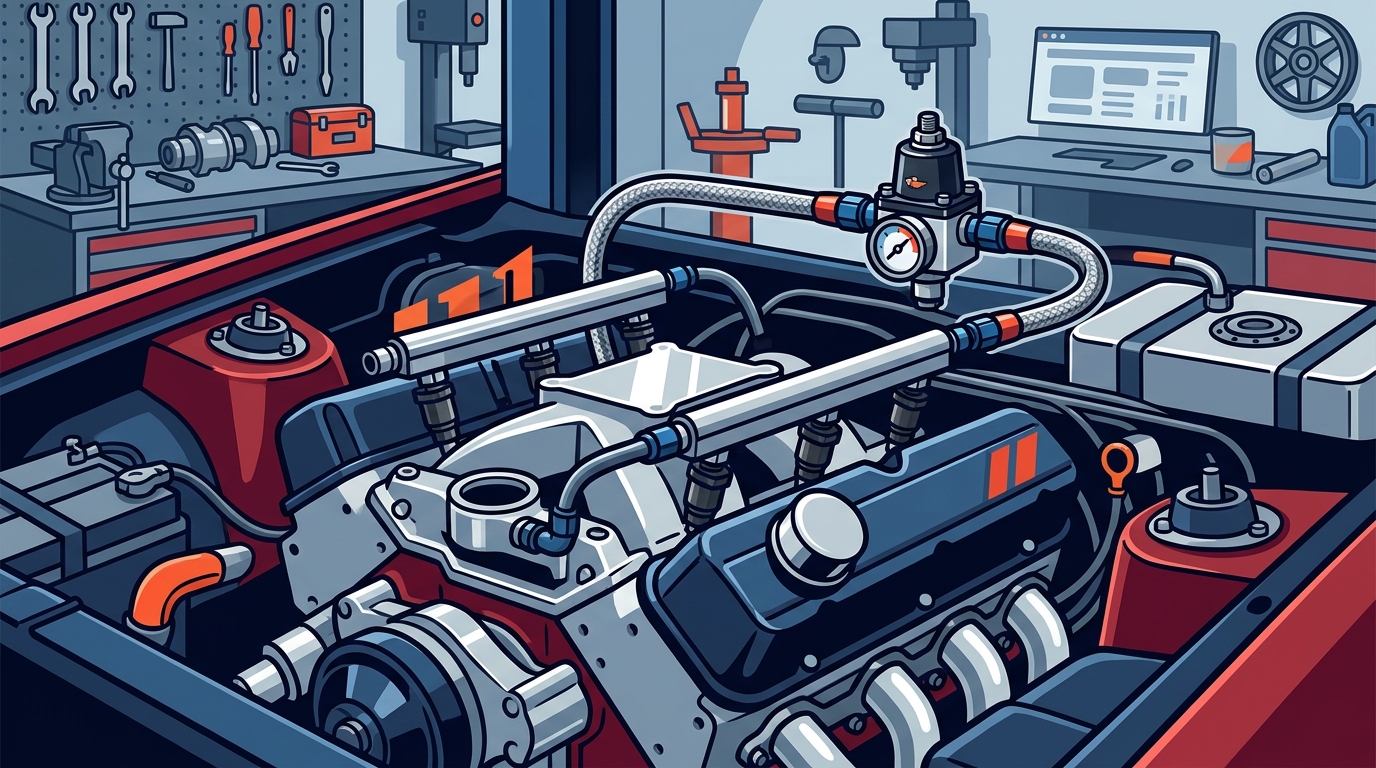
Proper pressure regulation is the heart of a stable fuel system. A fuel pressure regulator maintains constant pressure at the injectors regardless of engine load. Without a regulator, pressure would spike at idle and drop at wide-open throttle, causing erratic engine behavior.
Returning vs. Returnless Systems
Older Ford and Chevy systems often used a return-style system, where excess fuel is sent back to the tank to keep the fuel cool and maintain pressure. Modern systems, particularly those from Ford's Coyote platform and GM's LT engines, often use returnless systems where the pressure is regulated at the tank or the rail.
When upgrading a returnless system, you must ensure the new pump can handle the pressure without a mechanical regulator. If you install a mechanical regulator on a returnless system, you risk over-pressurizing the lines and causing leaks or bursts. Always consult the manufacturer's specifications for your specific engine platform.
Heat Management
Fuel heats up as it is pumped. Hot fuel is more likely to vaporize, leading to cavitation. In high-performance builds, it is common to install a fuel cooler or a heat exchanger in the return line. This keeps the fuel temperature stable, ensuring consistent density and flow. Neglecting heat management is a silent killer of high-performance fuel systems.
Fuel Line Sizing and Material
The size of your fuel lines is just as important as the pump itself. Using lines that are too small creates a bottleneck, restricting flow and causing pressure drops. For high-horsepower applications, you must upgrade to larger diameter lines, typically 6 AN or 8 AN fittings.
AN Fittings and Flare Standards
Always use AN (Army-Navy) fittings for high-pressure applications. These fittings are designed to handle extreme pressures and vibrations. Avoid using standard hose clamps or barb fittings for the main feed lines. Barb fittings can leak or blow off under high pressure, creating a severe fire hazard.
Material Compatibility
If you are running ethanol blends, you must use fuel-compatible materials. Standard rubber hoses will degrade rapidly when exposed to ethanol, leading to swelling, cracking, and eventual failure. Use braided stainless steel lines with PTFE (Teflon) liners. These lines are impervious to fuel chemicals and can handle high pressures without expanding.
Electrical Integration and Wiring
A powerful pump is useless if it does not receive adequate electrical power. A common mistake is using the factory wiring harness to power an upgraded high-flow pump. The factory wires are often too thin to handle the increased amperage draw, leading to voltage drops and overheating.
Relay and Fuse Requirements
You must install a dedicated relay and fuse for the fuel pump. The relay should be mounted close to the pump to minimize the length of the high-current wire run. Use a fuse holder with a fuse rated slightly above the pump's maximum amperage draw. This protects the system from short circuits and electrical fires.
Grounding
Ensure the pump has a solid ground connection. A poor ground can cause erratic pump operation and voltage spikes that damage the pump motor. Run a dedicated ground wire from the pump to a clean, bare metal point on the chassis or engine block.
Tuning and Calibration
Installing new hardware is only half the battle. The engine control unit (ECU) must be tuned to recognize the new fuel system's capabilities. ECU tuning adjusts the fuel maps, ignition timing, and boost pressure to optimize performance and safety.
Wideband Oxygen Sensors
You cannot tune a fuel system accurately without real-time data. Install a wideband oxygen sensor in your exhaust system. This sensor provides precise air-fuel ratio readings, allowing the tuner to adjust the fuel maps accurately. Relying on the factory O2 sensor is insufficient for high-performance builds.
Safe Air-Fuel Ratios
During the tuning process, monitor the air-fuel ratio closely. A lean condition (too much air, not enough fuel) can destroy an engine in seconds. For forced induction engines, a rich mixture is often required to cool the combustion chamber. Ensure your tuner understands the specific requirements of your fuel type and engine configuration.
Key Takeaways
- Calculate Flow, Not Just Pressure: Ensure your pump delivers the required LPH at your target operating pressure, not just at zero flow.
- Upgrade Wiring and Relays: Factory wiring cannot support high-flow pumps. Use dedicated relays and appropriately gauged wires to prevent voltage drops.
- Use AN Fittings: Replace all high-pressure lines with braided stainless steel AN fittings to prevent leaks and bursts.
- Manage Heat: Hot fuel vaporizes. Use fuel coolers or ensure proper pump placement to keep fuel temperatures stable.
- Tune After Hardware: Never run a new fuel system without a professional ECU tune and wideband data logging.
- Check Compatibility: Ensure all materials are compatible with your chosen fuel type, especially if using ethanol blends.
- Professional Installation: Fuel system upgrades involve high pressures and fire hazards. Professional installation is recommended for complex builds.
Frequently Asked Questions
How do I calculate the fuel pump size I need?
You can calculate the required fuel flow using the formula: (Target Horsepower x Brake Specific Fuel Consumption) / Fuel Density. For gasoline, a BSFC of 0.4 to 0.5 is typical. Divide the result by the number of injectors to get the flow per injector, then add a 15-20 percent safety margin.
Can I use the factory fuel pump for a horsepower upgrade?
In most cases, no. The factory pump is designed for stock power levels. Even moderate upgrades, such as a cold air intake and tune, may exceed the factory pump's capacity. High-horsepower builds almost always require an upgraded in-tank pump or an external high-pressure pump.
What is the difference between a return and returnless fuel system?
A return system sends excess fuel back to the tank, helping to cool the fuel and maintain pressure. A returnless system regulates pressure at the tank or rail, sending all pumped fuel to the engine. Returnless systems are common in modern Ford and Chevy vehicles but can be more challenging to upgrade for extreme performance.
Why do I need a fuel pressure regulator?
A fuel pressure regulator ensures that the fuel pressure at the injectors remains constant regardless of engine vacuum or boost. Without it, the fuel pressure would fluctuate, causing the engine to run too rich at idle and too lean under boost, leading to poor performance and potential engine damage.
Is it safe to run ethanol fuel in a modified fuel system?
Yes, but you must ensure all components are ethanol-compatible. Ethanol absorbs water and can degrade certain rubber and plastic components. Use ethanol-compatible lines, seals, and pumps. Additionally, ethanol has a lower energy density, so you will need more fuel flow to achieve the same horsepower.
How often should I replace fuel lines?
Braided stainless steel lines with PTFE liners can last for many years if installed correctly. However, you should inspect them regularly for signs of wear, chafing, or leaks. Replace any lines that show signs of damage immediately to prevent fire hazards.
What is the role of a wideband oxygen sensor in tuning?
A wideband oxygen sensor provides real-time, precise air-fuel ratio data. This allows the tuner to adjust the fuel maps accurately, ensuring the engine is running at the optimal mixture for power and safety. It is essential for preventing lean conditions that can destroy an engine.
Contact Total Performance
Upgrading your Ford or Chevy fuel system is a complex process that requires precision and expertise. At Total Performance, we specialize in high-performance automotive upgrades and can help you navigate the complexities of fuel system engineering. Our team of experts can assist you in selecting the right components, ensuring proper installation, and providing professional tuning services.
Do not risk your engine's health with guesswork. Contact us today to schedule a consultation and ensure your build is safe, reliable, and powerful. Visit our Customer Experience page to learn more about our services.