
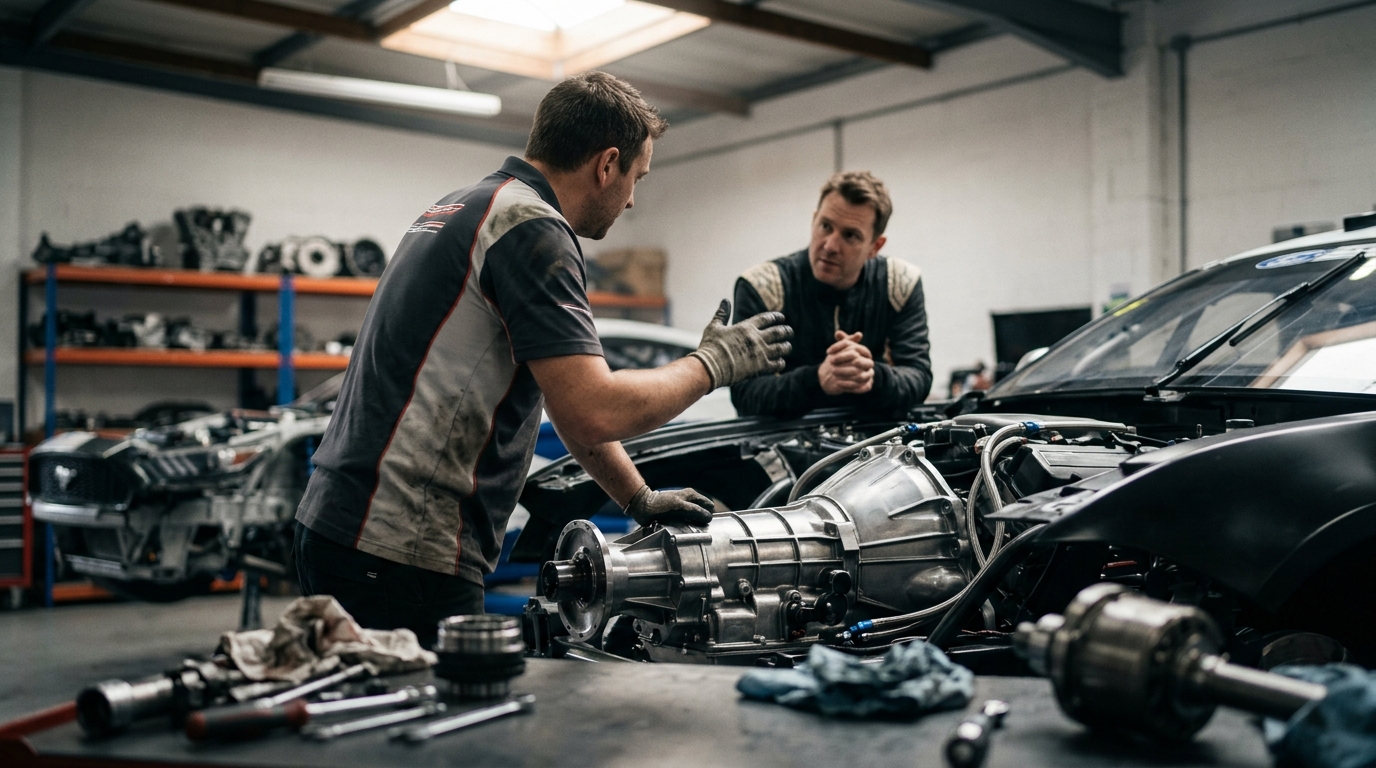
How to Select and Install a Racing Transmission for Your Ford or Chevy Build in Australia
Selecting the correct transmission is the single most critical decision in any high-performance engine build. A mismatch between your engine's torque output and the transmission's capacity will result in immediate mechanical failure. According to industry data, over 60% of track-day retirements are caused by drivetrain failures rather than engine issues. This statistic highlights why proper component selection is not optional but essential for reliability. Total Performance Australia stocks a vast inventory of Chevy and Ford transmission components to ensure your build survives the rigors of Australian racing conditions.
Understanding Transmission Types
Before diving into specific brands, you must understand the fundamental differences between manual and automatic transmissions in a racing context. A manual transmission offers direct driver control and lighter weight, which is crucial for circuit racing. An automatic transmission, particularly a modern torque converter automatic, can launch harder and shift faster than most human drivers.
Manual transmissions are the traditional choice for purists. They rely on a clutch pack to disengage power. The durability of a manual depends heavily on the clutch quality and the synchro design. For high-torque applications, a dog-box or sequential manual is often required. These units eliminate the synchros for faster shifts but sacrifice streetability.
Automatic transmissions have evolved significantly. The TH400 and C6 are legendary for their durability. However, modern builds often utilize the 4L80E or 6L80E for their overdrive capabilities and electronic control. The key to automatic reliability is the torque converter. A stall speed that matches your engine's power band is vital. If the stall speed is too low, the car will feel sluggish. If it is too high, the converter will overheat rapidly.
Ford vs. Chevy Platform Considerations
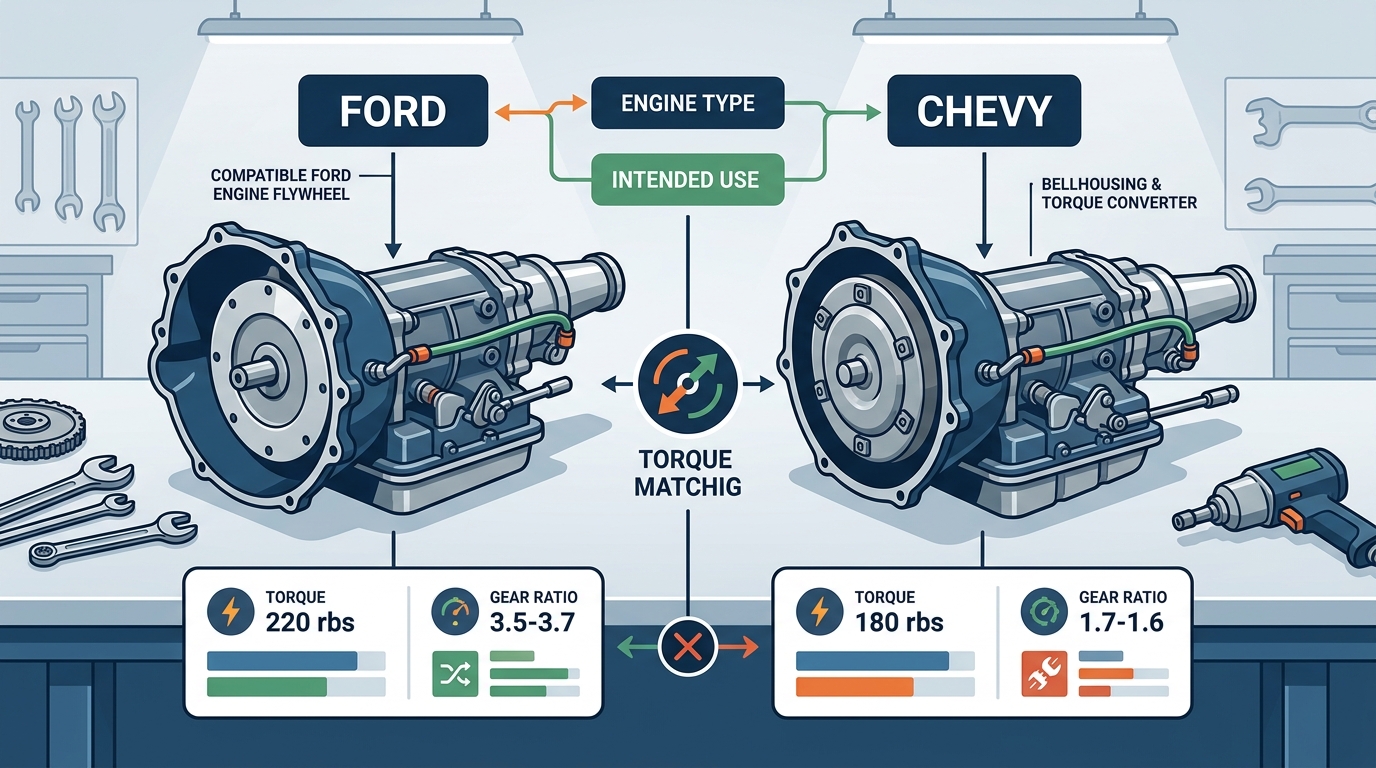
Choosing between a Ford and a Chevy platform dictates your transmission options. These two manufacturers have distinct bellhousing patterns and input shaft designs. Total Performance Australia specializes in both, ensuring you get the correct cross-reference parts for your swap.
Chevy Small Block and Big Block
The Chevy Small Block is the most popular swap in Australia. Its compact size and lightweight design make it ideal for Mustangs, Falcons, and Commodores. The bellhousing pattern is standard across most V8s. When pairing a Chevy engine with a transmission, you must match the input shaft splines. The TH350 and TH400 are the go-to choices for high-horsepower builds. For LS swaps, the LSX engine family requires a specific bellhousing pattern that differs from the classic small block.
Ford Windsor and Cleveland
Ford engines present a different challenge. The Windsor family, including the 302 and 351W, shares a common bellhousing pattern. The Cleveland engines, found in older Falcons and Mustangs, have a unique pattern that requires specific adapters. The Ford C4 and C6 are the traditional automatic choices. The C6 is renowned for its strength and is often used in heavy vehicles like the Ford Falcon GT. For manual swaps, the T5 and TKO transmissions are popular, but they require specific bellhousing adapters for Ford engines.
Selecting the Right Gearbox
Selection criteria must be based on torque capacity, gear ratios, and physical dimensions. You cannot simply pick the strongest transmission; it must fit your chassis and match your engine's power curve.
| Transmission Model | Platform | Max Torque Capacity | Best Use Case |
|---|---|---|---|
| TH400 | Chevy | 1200+ Nm | High-horsepower drag racing |
| C6 | Ford | 1000+ Nm | Heavy duty street and strip |
| 4L80E | Chevy | 1100+ Nm | Overdrive highway cruising |
| TKO 600 | Ford/Chevy | 750 Nm | Street performance manual |
When selecting a transmission, consider the torque converter for automatics. The converter acts as a fluid coupling and must be balanced to the specific transmission. An unbalanced converter will cause severe vibration and premature bearing failure. For manuals, the clutch disc material is critical. Sintered iron clutches offer high friction and durability but require heavy pedal effort. Organic clutches are smoother for street use but wear faster under track conditions.
Installation Preparation
Proper preparation prevents costly mistakes during the install. You need a transmission jack, a torque wrench, and a comprehensive set of sockets. Ensure your engine is properly mounted and aligned before attempting to mate the transmission. Misalignment is the most common cause of input shaft breakage.
First, inspect the bellhousing for runout. Use a dial indicator to measure the concentricity of the bellhousing bore. If the runout exceeds 0.006 inches, the bellhousing must be machined or replaced. A misaligned bellhousing will bind the input shaft, leading to immediate failure. Second, check the flexplate or flywheel. Ensure it is properly balanced and that the ring gear teeth are not damaged. A damaged ring gear will strip under load.
For automatic transmissions, you must also prepare the transmission cooler. Racing generates immense heat, and standard radiator coolers are often insufficient. An auxiliary cooler mounted in front of the radiator is essential. The fluid flow rate must be adequate to maintain operating temperatures below 200 degrees Fahrenheit. Excessive heat degrades the fluid and destroys the clutch packs.
Critical Installation Steps
The installation process requires precision and patience. Follow these steps to ensure a successful mating of the engine and transmission.
1. Align the Engine and Transmission
Use alignment tools or a piece of wire to check the alignment of the engine block and transmission bellhousing. The input shaft must slide into the clutch or torque converter hub without force. If it binds, do not force it. Forcing the shaft will break the splines. Adjust the engine mounts as necessary to achieve perfect alignment.
2. Install the Flexplate or Flywheel
For automatics, install the flexplate onto the crankshaft. Torque the bolts to specification in a star pattern. For manuals, install the flywheel and clutch assembly. Ensure the clutch is centered using a clutch alignment tool. The input shaft must enter the clutch hub smoothly. Tighten the pressure plate bolts gradually to avoid warping the disc.
3. Mate the Transmission
Lift the transmission into place using a transmission jack. Align the bellhousing bolts with the engine block holes. Insert the bolts hand-tight first. Check the alignment again before fully torquing the bolts. Torque the bellhousing bolts to the manufacturer's specification. Over-tightening can distort the bellhousing, causing misalignment.
4. Connect Linkages and Electronics
Connect the shift linkage or electronic shifter cables. Ensure the linkage moves smoothly through all gears. For automatics, connect the kickdown linkage if applicable. For electronic transmissions, connect the wiring harness. Ensure all connectors are secure and protected from heat and moisture. Test the gear selection before starting the engine.
5. Fill and Test
Fill the transmission with the correct type and amount of fluid. For automatics, use the specified ATF. For manuals, use the recommended gear oil. Start the engine and check for leaks. Shift through all gears to ensure proper engagement. For automatics, check the fluid level with the engine running and the transmission in park. Adjust the level as necessary.
Key Takeaways
- Match Torque Capacity: Ensure the transmission can handle at least 20% more torque than your engine produces.
- Check Bellhousing Alignment: Misalignment is the primary cause of input shaft failure during installation.
- Select Proper Stall Speed: The torque converter stall speed must match your engine's peak horsepower RPM.
- Install Auxiliary Cooling: Racing transmissions require external coolers to prevent thermal failure.
- Use Correct Fluids: Using the wrong ATF or gear oil can lead to immediate clutch slippage or gear wear.
- Torque to Specification: Always use a torque wrench for bellhousing and flexplate bolts.
- Verify Linkage Movement: Ensure shift linkages are adjusted for full gear engagement before driving.
Frequently Asked Questions
What is the strongest automatic transmission for a Chevy LS engine?
The TH400 is widely considered the strongest stock automatic for Chevy applications. It can handle over 1200 Nm of torque with proper internal upgrades. For LS swaps, the TH400 requires a specific adapter plate and bellhousing. Total Performance Australia stocks the necessary adapters for LS engine compatibility.
Can I use a Ford C6 transmission with a Chevy engine?
Yes, you can use a Ford C6 with a Chevy engine, but it requires a specific adapter plate. The bellhousing patterns are different, so the adapter is essential for proper mounting. You will also need a custom driveshaft to match the new output flange.
How do I choose the right stall speed for my torque converter?
The stall speed should be slightly above your engine's peak torque RPM. For example, if your engine makes peak torque at 5500 RPM, a stall speed of 5600 to 5800 RPM is ideal. This ensures the engine stays in its power band during launch. Consult a torque converter manufacturer for specific recommendations.
What type of fluid should I use in a racing manual transmission?
Most racing manual transmissions require a 75W-90 or 80W-90 gear oil with extreme pressure (EP) additives. Synthetic gear oil is preferred for its thermal stability and lubrication properties. Avoid using motor oil or automatic transmission fluid in manual transmissions.
Do I need a clutch slave cylinder for a manual swap?
Yes, you need a complete hydraulic clutch system, including a master cylinder, slave cylinder, and hydraulic line. The slave cylinder must be mounted to the transmission bellhousing. Ensure the hydraulic system is properly bled to prevent air bubbles, which cause spongy pedal feel.
How often should I service a racing transmission?
Racing transmissions should be serviced after every 50 to 100 hours of track use. This includes changing the fluid and filter. For automatics, inspect the fluid for metal particles, which indicate internal wear. For manuals, check the gear oil for metal shavings. Regular service extends the life of the transmission significantly.
Where can I buy transmission parts in Australia?
Total Performance Australia is a leading supplier of high-performance transmission parts. We stock a wide range of Chevy and Ford transmission components, including gears, bearings, and seals. Visit our online store or contact our team for expert advice on your build.
Ready to Build Your Dream Drivetrain?
Choosing the right transmission is just the first step. Proper installation and tuning are equally important for success on the track. Total Performance Australia provides the parts, expertise, and support you need to complete your build. Visit our website to browse our extensive catalog of Chevy and Ford transmission components. Contact our team today to discuss your specific requirements and get expert advice on your next project.